Stainless steel bread makers offer superior durability and rust resistance, ensuring consistent, high-quality homemade bread for years. These appliances feature robust engineering, often including food-grade SU 304 stainless steel for the baking pan and kneading paddles, which prevents corrosion and ensures non-toxic baking. This material also provides excellent heat distribution for even baking and a hygienic, non-porous surface that resists bacteria and odors, making cleanup easier.
Why Choose a Stainless Steel Bread Maker?
Opting for a bread maker crafted with stainless steel brings a multitude of benefits that improve your baking experience and enhance kitchen longevity. This material isn’t just about aesthetics; it’s a cornerstone of durability and performance. It promises a dependable appliance that consistently delivers excellent results while maintaining its pristine condition over time.
Durability and Longevity
Stainless steel is renowned for its exceptional durability, resisting common kitchen adversaries like scratches, dents, and stains. Unlike other metals or materials, it’s engineered to withstand the rigors of daily use, making it a long-term investment for any home baker. This inherent toughness means your bread maker will maintain its structural integrity and sleek appearance for many years. For explore our home kitchen reviews on this site.
Superior Heat Distribution for Better Baking
One of stainless steel’s key advantages in baking is its excellent heat distribution. This property ensures that your bread bakes more evenly, developing a consistent, golden-brown crust and a perfectly cooked interior. An even bake translates to superior texture and flavor, transforming every loaf into a culinary masterpiece. It helps prevent those frustrating moments of overcooked edges and underbaked centers.
Enhanced Hygiene and Food Safety
In the kitchen, hygiene is paramount, and stainless steel excels in this regard. Its non-porous surface naturally resists the absorption of bacteria, odors, and food particles, making it incredibly easy to clean. This hygienic quality ensures that your bread maker remains a safe environment for food preparation, contributing to healthier, untainted homemade bread. A simple wipe-down is often all that’s needed to restore its cleanliness.
Non-Toxic Baking
Many traditional bread pans feature non-stick coatings, which, while convenient, can degrade over time and raise concerns about chemical exposure. Stainless steel, especially food-grade varieties like SU 304, offers a safe, non-toxic alternative for your baking pan and kneading elements. This allows you to bake with peace of mind, knowing your bread is free from potentially harmful substances.
Aesthetic Appeal
Beyond its practical benefits, stainless steel brings a sleek, modern, and professional aesthetic to any kitchen countertop. Its polished or brushed finish complements a wide range of kitchen decors, making your bread maker not just an appliance, but an attractive design element. It adds a touch of sophistication that plastic alternatives simply cannot match.
Understanding Rust Resistance in Stainless Steel Bread Makers
Stainless steel isn’t just “steel that stains less”; it’s a specific alloy engineered for corrosion resistance, making it an ideal choice for the humid and warm environment of a bread maker. Its ability to resist rust is a key differentiator, but it’s important to understand how this works and what factors can still affect it. This knowledge empowers you to maximize your appliance’s lifespan.
At the heart of stainless steel’s rust resistance is its chromium content, which forms a thin, invisible, self-repairing “passive layer” on the surface when exposed to oxygen. This protective layer acts as a barrier, preventing oxidation and corrosion. This natural defense mechanism is what makes stainless steel so robust against rust, even in environments where moisture and heat are prevalent.
However, stainless steel is not entirely infallible. While highly resistant, improper care can compromise its protective layer. For instance, leaving water to pool for extended periods, especially underneath the kneading paddle shaft where moisture can get trapped, can eventually lead to localized corrosion. Abrasive cleaners or metal utensils can scratch the surface, potentially damaging the passive layer and making it vulnerable.
“Proper maintenance is the critical partner to stainless steel’s inherent rust resistance; without it, even the best materials can show signs of wear.” – Chef Eleanor Vance, Culinary Engineer specializing in Food Appliances
Interestingly, some common cleaning agents, such as undiluted vinegar, can also be detrimental. Vinegar contains acetic acid, which can strip away the passive layer and promote oxidation if left on the surface for too long or used improperly. Therefore, while stainless steel significantly reduces the risk of rust, it doesn’t eliminate the need for careful cleaning and maintenance practices.
Key Features of High-Quality Stainless Steel Bread Makers
When investing in a stainless steel bread maker, looking beyond the shiny exterior is crucial. The best machines integrate durable materials with smart design and advanced functionalities to deliver exceptional baking performance and long-term reliability. Understanding these key features will help you identify a model that truly meets your needs.
Material Beyond the Casing
|
Our Picks for the Best Bread Maker in 2026
As an Amazon Associate I earn from qualifying purchases.
|
||
| Num | Product | Action |
|---|---|---|
| 1 | Bread Maker, 2.2LB 16-in-1 Bread Machine, Automatic Bread Maker Machine with Nonstick Ceramic Pan & 15H Timer & 1H Keep Warm for Beginner, Breadmaker with Gluten-Free, French, Yogurt, Recipe |

|
| 2 | Cuisinart Bread Maker Machine, Stainless Steel Convection Bread Machine with 16 Menu Options, 3 Loaf Sizes Up to 2 Lb., 3 Crust Colors, Includes Measuring Cup, Spoon & Kneading Hook, CBK-210 |
|
| 3 | Rosewill 25-in-1 Automatic Bread Maker Machine with 3 Loaf Size up to 2 Lb, 700W High Power Dual Heater Bread Maker with BPA-free Nonstick Coating Pan, Max 15 Hours Delay Timer, Low Noise - Gray |
|
| 4 | Cuisinart Bread Maker Machine, Stainless Steel Automatic Bread Machine with 12 Menu Options, 3 Loaf Sizes up to 2 Lb., 3 Crust Colors, Removable Nonstick Baking Pan & Kneading Paddle, CBK-110NAS |
|
| 5 | MERIOR 25-IN-1 Bread Maker with Visible Lid | 2lb Automatic Machine, Auto Nut Dispenser, 13-Hour Delay Timer, One-Touch Control & Recipes – Easy Operation, High Success for Homemade Bread |
|
| 6 | Elite Gourmet Programmable Bread Maker, 2 lb Loaf, 3 Sizes, 19 Presets incl. Gluten-Free, Dough & Jam, Delay Timer, Black |
|
| 7 | 25-in-1 Bread Maker Machine with Automatic Dual Dispenser, 2LB Stainless Steel Breadmaker with Gluten-Free, Dough, Jam, Yogurt etc Settings, Silver |
|
| 8 | Zojirushi BB-PDC20BA Home Bakery Virtuoso Plus Breadmaker, 2 lb. loaf of bread |
|
| 9 | 2LB Bread Maker Machine, OSIPOTO 17 in 1 Automatic Stainless Steel Bread Machine, Non-stick, Beginner-Friendly Controls, 15 Hour Timer, Easy to Clean Low Noise, High Success Rate for Homemade Bread |
|
| 10 | Elite Gourmet Programmable Bread Maker, 2 lb Loaf, 3 Sizes, 19 Presets incl. Gluten-Free, Dough & Jam, Delay Timer, Mint |
|
While a stainless steel exterior is desirable for aesthetics and outer durability, true rust resistance and non-toxic baking extend to internal components. Look for models that boast a food-grade stainless steel baking pan and kneading paddles, such as those made from SU 304 stainless steel. This ensures that the primary food-contact surfaces are free from chemical coatings and highly resistant to corrosion and wear.
Programmable Cycles and Customization
Modern stainless steel bread makers offer a wide array of pre-programmed cycles, typically ranging from 12 to over 30 options. These include settings for basic white, whole wheat, French, sweet, gluten-free, sourdough, dough-only, jam, and even specific types like low-carb or vegan breads. Advanced machines, like the Sana Smart Bread Maker, take this further with full programmability, allowing you to customize every parameter—kneading speed, rise times, and baking temperatures—for ultimate control over your recipes.
Loaf Sizes and Crust Options
Versatility in loaf size is a practical feature, with most machines offering options for 1, 1.5, and 2-pound loaves, and some larger models accommodating up to 2.5 pounds. This allows you to bake according to your household’s needs, minimizing waste. Adjustable crust settings (light, medium, dark) are also standard, letting you tailor the crispness and color of your bread to personal preference.
Automatic Dispensers and Convenience Functions
For bakers who love to incorporate ingredients like fruits, nuts, or seeds, an automatic dispenser is a major upgrade. This feature adds mix-ins at the optimal time during the kneading cycle, ensuring even distribution without manual intervention. Delay start timers allow you to add ingredients hours in advance and wake up to fresh bread, while a keep-warm function ensures your loaf stays toasty until you’re ready to slice it.
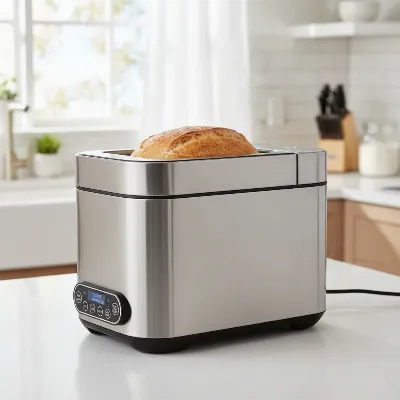 Stainless steel bread maker with fresh loaf in a modern kitchen setting
Advanced Heating Technology
The quality of your bread’s crust and crumb is heavily influenced by the heating system. Look for machines with advanced heating technology, such as dual-heater systems (top and bottom heating elements) which promote more uniform 360-degree baking and browning, preventing a pale top crust. Convection fans are another excellent feature, circulating hot air for consistent heat distribution and a wonderfully defined crust.
Quiet Operation
Nobody wants a noisy appliance disrupting their kitchen’s tranquility. Some stainless steel bread makers are specifically designed for quiet operation during kneading and baking cycles. This feature, often highlighted in product reviews, can significantly improve the overall user experience, making the bread-making process more enjoyable. Machines like the Neretva and Gemelli Artisan are noted for their quiet performance.
Ease of Cleaning and Maintenance
Despite stainless steel’s non-porous nature, ease of cleaning remains a critical factor. Look for models with removable bread pans and kneading paddles, as these components are typically the ones requiring the most attention. While many stainless steel pans have a non-stick coating (even if not Teflon), proper care as discussed earlier is essential to maintain their integrity. A well-designed machine should make post-baking cleanup quick and effortless.
Top Stainless Steel Bread Maker Models to Consider
The market offers several excellent stainless steel bread makers that blend durability with advanced features. Here’s a look at some highly-regarded models known for their robust construction and performance. Each offers a unique set of benefits, catering to different baking preferences and needs.
-
Cuisinart 2-Pound Bread Maker: Often hailed as a top performer, this Cuisinart model combines a stainless steel and plastic exterior with reliable technology. It typically features 12-16 pre-programmed settings, customizable crust options, a delay start, and a convection fan for even browning. Its quiet operation and a generous 3-year warranty make it a popular and trusted choice for many home bakers.
-
Neretva Bread Maker Machine: This model stands out for its extensive customization options and quiet performance. With 20 automatic programs, three crust shades, and a capacity for 1.5 to 2-pound loaves, it’s versatile for various recipes. The Neretva incorporates a dual-heater system for superior 360-degree baking, ensuring a consistently even loaf every time.
-
Zojirushi Home Bakery Virtuoso Plus: A favorite among serious bakers, the Zojirushi is praised for producing large, rectangular loaves with exceptional consistency. It features dual kneading paddles that ensure thorough mixing and a unique top and bottom heating element for perfectly even browning. While a significant investment, its legendary durability means it often lasts for decades.
-
Sana Smart Bread Maker: What sets the Sana Smart Bread Maker apart is its commitment to non-toxic baking with an uncoated SU 304 food-grade stainless steel pan and kneaders (available in Standard and Exclusive models). This machine offers unparalleled control, allowing users to fully program kneading speeds, rise cycles, and baking temperatures, making it ideal for experimental bakers.
-
Breville Custom Loaf Bread Maker: This high-end bread maker is perfect for those seeking professional-quality results and large capacity, accommodating up to 2.5-pound loaves. It boasts 13 settings, an automatic add-in dispenser, and an intuitive interface. While expensive, its robust stainless steel construction and consistent performance justify the investment for dedicated home bakers.
-
Sage the Custom Loaf Breadmaker: Known for its high-quality stainless steel casing, the Sage model offers four loaf sizes and a range of presets, along with a unique custom function. A helpful interior light allows you to monitor the baking process, and its collapsible paddle ensures a minimal hole in the finished loaf, combining convenience with thoughtful design.
How to Select Your Ideal Stainless Steel Bread Maker
Choosing the perfect stainless steel bread maker involves more than just picking a shiny appliance; it’s about aligning the machine’s capabilities with your personal baking habits and kitchen setup. By carefully considering a few key factors, you can make an informed decision that will bring you years of satisfaction. This personalized approach ensures your investment is truly worthwhile.
Assess Your Baking Needs
Start by evaluating how often you plan to bake and what types of bread you’ll make. If you’re an occasional baker looking for simple white loaves, a basic model with fewer programs might suffice. However, if you envision daily fresh bread, experimenting with gluten-free, sourdough, or various doughs, a machine with more advanced programming and specific cycles will be more suitable. Consider the typical loaf size your household consumes to ensure the machine’s capacity aligns with your family’s needs.
Budget Considerations
Bread makers vary widely in price, from budget-friendly options to high-end, feature-rich models. While stainless steel components can sometimes lead to a higher upfront cost, consider the long-term value. A durable, rust-resistant machine may save you money on replacements and repairs in the future. Determine a budget range you’re comfortable with, and then look for the best features and build quality within that range.
Desired Features
Think about the specific functionalities that would enhance your baking. Do you want an automatic dispenser for fruits and nuts, or do you prefer to add them manually? Is a delay start timer essential for waking up to fresh bread? Do you need extensive customization options for experimenting with unique recipes, or are pre-set programs sufficient? Dual kneading paddles are beneficial for larger or denser loaves, while a convection fan can improve crust quality. Prioritize features that genuinely add value to your personal baking routine.
Brand Reputation and Warranty
Researching reputable brands known for quality and customer support is always a wise step. Brands like Zojirushi, Cuisinart, and Breville consistently receive high praise for their bread makers. Check the warranty offered. A solid warranty, ideally one year or more, indicates the manufacturer’s confidence in their product’s durability and provides peace of mind for your investment. Cuisinart, for instance, offers a commendable three-year warranty on some models.
Essential Care and Maintenance for Rust-Free Performance
Even with the inherent rust resistance of stainless steel, consistent care and maintenance are vital to ensure your bread maker performs optimally and remains rust-free for its entire lifespan. Neglecting simple cleaning practices can compromise the material’s protective qualities and lead to premature wear. Implementing these steps will safeguard your appliance and your delicious loaves.
Daily Cleaning Practices
After each use, ensure you clean your bread maker thoroughly. Remove the bread pan and kneading paddle, washing them with mild dish soap and warm water. Avoid abrasive sponges or harsh detergents, which can scratch the surface or damage any non-stick coatings. For the interior of the machine, including the heating element, use a damp, wrung-out cloth to wipe away any crumbs or dough residue.
“The single most impactful action for preventing rust and prolonging your bread maker’s life is to thoroughly dry every component immediately after cleaning.” – Admin, ReviewStank.com
Crucially, always dry all parts completely before reassembling or storing your machine. The warm, moist environment of a bread maker is a prime breeding ground for rust if residual water is left behind, especially around the kneading paddle shaft where moisture can become trapped.
Avoiding Harmful Substances
To preserve the integrity of your stainless steel components, steer clear of certain substances and tools. Never use metal utensils to remove bread or scrape dough, as they can scratch the pan and potentially compromise its rust resistance or non-stick properties. Similarly, avoid abrasive cleaners, steel wool, or harsh chemicals. While diluted vinegar can be used for occasional descaling, prolonged exposure to undiluted vinegar can, ironically, cause some metals to rust by stripping away their protective layers.
Periodic Oiling of Kneading Shaft
The kneading shaft, where the paddle attaches, is a critical moving part and a common area for potential issues. Periodically oiling this shaft can significantly extend its life and prevent rust. Use food-safe 3-in-1 oil or sewing machine oil—never cooking oil, mineral oil, or WD-40, as these can become gummy, damage seals, or be toxic. Apply a drop or two to the shaft underneath the pan, where it connects to the drive mechanism, to keep it moving freely and silently. This simple step can prevent premature wear and the dreaded “grease” or rust leaching into your bread.
Proper Storage
When not in use, store your bread maker in a dry, well-ventilated area. Ensure all components are completely dry before storage to prevent any moisture buildup. If your machine comes with a lid, ensure it’s clean and dry as well. Keeping the machine assembled or with parts readily accessible and dry will make your next baking session seamless and prevent any unexpected rust surprises.
Common Issues and Troubleshooting for Stainless Steel Bread Makers
Even the most robust stainless steel bread makers can encounter occasional hiccups. Knowing how to diagnose and address common problems can save you frustration and ensure your machine continues to produce delicious loaves. Many issues are often easily resolvable with a little troubleshooting.
Bread Not Rising or Baking Evenly
If your bread isn’t rising properly or is baking unevenly, several factors could be at play. First, check your yeast’s freshness and quantity; old or insufficient yeast is a common culprit. Ensure ingredients are added in the correct order as specified by your recipe or machine’s manual (liquids first, then dry ingredients, with yeast last, away from salt). For uneven baking, especially if your machine has only a bottom heating element, ensure your ingredients are at room temperature. Advanced stainless steel bread makers with dual heating elements or convection fans are designed to minimize uneven baking. If using a custom program, review your temperature and timing settings for consistency.
Paddle Issues (Rust Around Shaft, Removal)
Rust around the kneading paddle shaft, although less common with stainless steel, can still occur due to trapped moisture or damage to the protective layer. If you observe rust, refer to the maintenance section on proper drying and periodic oiling. If the paddle is stuck or difficult to remove, try soaking the pan with warm soapy water for a short period (under 30 minutes) to loosen any baked-on dough around the shaft. Never force it with metal tools, as this can cause damage. Some advanced machines feature collapsible paddles that minimize the hole in the finished loaf and are easier to remove post-bake. If the paddle mechanism seems worn, check your machine’s warranty for replacement options.
General Maintenance Tips to Prevent Problems
Beyond specific troubleshooting, consistent general maintenance prevents most common issues. Always adhere to recipe proportions, as too much dough can overflow or too little can result in a lopsided loaf. Keep the interior of the machine free from crumbs and debris, especially around the heating element, to ensure efficient operation and prevent fire hazards. Regularly check the power cord for any damage. By being proactive with cleaning and care, you can significantly extend your bread maker’s life and enjoy uninterrupted baking.
Conclusion
Embracing a stainless steel bread maker is a commitment to superior quality, enhanced durability, and healthier homemade bread. These robust appliances excel in resisting rust, distributing heat evenly, and offering a hygienic, non-toxic baking environment, all while adding a touch of modern elegance to your kitchen. From the extensive programmable options of models like the Sana Smart Bread Maker to the consistent performance of the Zojirushi Home Bakery Virtuoso Plus, there’s a rust-resistant stainless steel machine perfectly suited for every home baker.
Making a wise selection based on your specific needs—be it loaf size, program variety, or customization—and diligently following essential care and maintenance practices are key to unlocking years of delicious, worry-free baking. With your stainless steel bread maker, you’re not just making bread; you’re investing in a joyful culinary experience, ensuring every loaf is as perfect and wholesome as you intend it to be. So, are you ready to improve your home baking game and say goodbye to rust-related worries for good?
Frequently Asked Questions
Are all parts of a stainless steel bread maker rust-proof?
While the external casing and often the pan are made of rust-resistant stainless steel, not all internal components or small parts like the kneading paddle shaft might be entirely impervious to rust if not properly maintained. Food-grade stainless steel pans and paddles offer the highest resistance.
How often should I clean my stainless steel bread maker to prevent rust?
It is recommended to clean the bread pan and kneading paddle immediately after each use. For the machine’s interior, a quick wipe-down to remove crumbs and condensation after each bake, followed by a thorough drying of all parts, is crucial to prevent rust and maintain hygiene.
Can I put the stainless steel bread pan in the dishwasher?
Many manufacturers recommend hand-washing bread pans to preserve any non-stick coatings and the integrity of the paddle shaft mechanism. Always check your specific bread maker’s manual, but generally, hand-washing with mild soap and thoroughly drying is the safest approach.
What type of oil should I use for the kneading shaft?
For periodic maintenance, it is recommended to use food-safe 3-in-1 oil or sewing machine oil. Never use cooking oils, mineral oils, or products like WD-40, as these can gum up the mechanism, damage seals, or pose health risks when exposed to food.
Is stainless steel non-stick?
Pure stainless steel is not inherently non-stick in the same way Teflon or ceramic coatings are. However, with proper seasoning and baking techniques, bread often releases well. Some stainless steel bread pans may have an additional non-stick coating for convenience, while others, like the Sana Smart Bread Maker, are designed for successful baking in uncoated stainless steel.
Frequently Asked Questions
Are all parts of a stainless steel bread maker rust-proof?
While the external casing and often the pan are made of rust-resistant stainless steel, not all internal components or small parts like the kneading paddle shaft might be entirely impervious to rust if not properly maintained. Food-grade stainless steel pans and paddles, such as those made from SU 304, offer the highest resistance to corrosion.
How often should I clean my stainless steel bread maker to prevent rust?
It is recommended to clean the bread pan and kneading paddle immediately after each use. For the machine's interior, a quick wipe-down to remove crumbs and condensation after each bake, followed by a thorough drying of all parts, is crucial to prevent rust and maintain hygiene.
Can I put the stainless steel bread pan in the dishwasher?
Many manufacturers recommend hand-washing bread pans to preserve any non-stick coatings and the integrity of the paddle shaft mechanism. Always check your specific bread maker's manual, but generally, hand-washing with mild soap and thoroughly drying is the safest approach to extend its lifespan.
What type of oil should I use for the kneading shaft?
For periodic maintenance, it is recommended to use food-safe 3-in-1 oil or sewing machine oil. Never use cooking oils, mineral oils, or products like WD-40, as these can gum up the mechanism, damage seals, or pose health risks when exposed to food. A drop or two applied periodically keeps the shaft moving freely.
Is stainless steel inherently non-stick for baking bread?
Pure stainless steel is not inherently non-stick in the same way Teflon or ceramic coatings are. However, with proper seasoning and baking techniques, bread often releases well. Some stainless steel bread pans may have an additional non-stick coating for convenience, while others, like the Sana Smart Bread Maker, are designed for successful baking in uncoated stainless steel.
How to Select Your Ideal Stainless Steel Bread Maker
Choosing the perfect stainless steel bread maker involves aligning the machine's capabilities with your personal baking habits and kitchen setup to ensure long-term satisfaction.
Evaluate how often you plan to bake and the types of bread you'll make. For daily baking or experimenting with gluten-free and sourdough, a machine with advanced programming and specific cycles is more suitable. Consider the typical loaf size your household consumes to match the machineu2019s capacity.
Bread makers vary widely in price. While stainless steel components can increase upfront cost, consider the long-term value of a durable, rust-resistant machine that may save on replacements. Determine a comfortable budget range and seek the best features and build quality within it.
Think about specific functionalities that would enhance your baking, such as an automatic dispenser for mix-ins, a delay start timer, or extensive customization options. Dual kneading paddles are beneficial for larger loaves, and a convection fan can improve crust quality. Choose features that genuinely add value to your routine.
Investigate reputable brands known for quality and customer support, such as Zojirushi, Cuisinart, and Breville. Check the warranty offered; a solid warranty (ideally one year or more) indicates manufacturer confidence and provides peace of mind for your investment. Cuisinart, for example, offers a three-year warranty on some models.

As someone who bakes frequently, the hygienic, non-porous surface of these stainless steel machines is a game-changer. I used to worry about odors lingering in my old plastic-lined pan, but with this, everything stays fresh and clean. It’s made my weekly baking routine so much more enjoyable and worry-free.
I finally upgraded to a stainless steel bread maker after my old one rusted out, and the difference is night and day! The SU 304 stainless steel pan really does make a difference in how evenly my sourdough bakes. Cleanup is also a breeze, which is a huge plus for me. Definitely worth the investment for anyone serious about homemade bread.
I’ve been using one of the models mentioned, and it’s fantastic for everyday sandwich bread. The durability of the stainless steel is noticeable; it feels much sturdier than my previous machine. My only minor gripe is that the kneading paddles can sometimes leave a slightly larger hole in the bottom of the loaf than I’d prefer, but it’s a small trade-off for the overall quality.
I was excited about the rust resistance of these stainless steel bread makers, and it holds up well in that regard. However, I found that the heat distribution, while good, isn’t always perfect for very dense whole wheat loaves; I sometimes get a slightly darker crust on one side. It’s still a solid machine, but not quite the ‘perfect bake every time’ I was hoping for with those specific recipes.