A bread maker loaf collapses primarily due to ingredient imbalances, specifically too much yeast or an incorrect liquid-to-flour ratio, which weakens the gluten structure. Environmental factors like high temperature or humidity, and incorrect machine settings, also contribute to this common baking issue. Understanding these elements allows bakers to diagnose and correct the problem, ensuring consistently well-risen loaves.
Understanding Why Your Bread Maker Loaf Collapses
To effectively stop your bread maker loaf from collapsing, it helps to understand the underlying mechanics of bread making. At its core, bread baking is a delicate balance of ingredients, temperature, and time. Yeast consumes sugars to produce carbon dioxide gas, which gets trapped in the gluten network of the flour, causing the dough to rise. If any of these elements are out of sync, the gluten structure can weaken, leading to a rise that’s too rapid, too slow, or simply unsustainable. When this happens, the dough might over-expand and then deflate under its own weight or collapse during the baking process, leaving you with that disheartening dip in the middle.
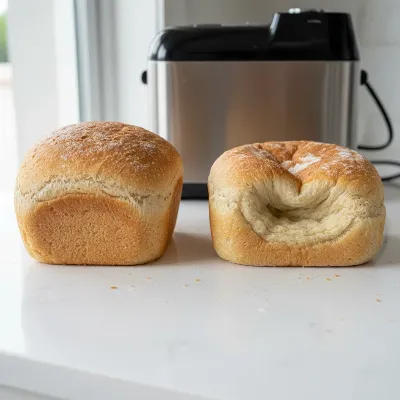 Comparison of a perfectly baked bread maker loaf and a collapsed, sunken bread machine loaf with a crater
Ingredient Imbalances: The Foundation of Your Loaf
The most frequent causes of a collapsed loaf often lie in the fundamental ingredients themselves. Precision is key in baking, and even minor deviations can have a significant impact on the final texture and structure.
- Yeast (Too Much, Too Little, or Old): Too much yeast is a primary offender. When excessive yeast ferments too rapidly, it produces gas faster than the gluten structure can comfortably contain. The dough over-rises, stretches its gluten network beyond its limits, and then deflates, often collapsing dramatically. Conversely, too little or old, inactive yeast will cause insufficient rising, leading to a dense loaf, which might also appear sunken. Always check the expiration date on your yeast and store it properly, often in the refrigerator or freezer, to maintain its potency.
- Liquid-to-Flour Ratio: The balance between liquid and flour is crucial for dough consistency. If your dough is too wet (too much liquid or not enough flour), it will be weak and unable to support its own structure as it rises, inevitably leading to collapse. High humidity in your kitchen can also subtly add extra moisture, contributing to a wetter dough. Conversely, a dough that is too dry (too much flour or not enough liquid) won’t develop sufficient gluten, resulting in a dense, short loaf that might not rise adequately.
- Sugar and Salt: These ingredients play more than just flavor roles. Sugar acts as food for the yeast; too much sugar can cause the yeast to become overactive and lead to over-proofing and collapse. Salt, on the other hand, is a crucial ingredient that helps control yeast activity and strengthens the gluten network, providing essential structure. Omitting or significantly reducing salt can lead to an uncontrollable rise and a subsequent collapse.
- Flour Type: Not all flours are created equal. Bread flour, with its higher protein content, develops more gluten than all-purpose flour, creating a stronger, more elastic dough capable of holding its rise. Using all-purpose flour in a recipe designed for bread flour can result in a weaker structure that struggles to maintain its shape and can collapse. Whole grain flours also behave differently; their bran content can cut gluten strands, requiring slight adjustments in liquid.
Environmental Factors and Machine Settings
|
Our Picks for the Best Bread Maker in 2026
As an Amazon Associate I earn from qualifying purchases.
|
||
| Num | Product | Action |
|---|---|---|
| 1 | MERIOR 25-IN-1 Bread Maker with Visible Lid | 2lb Automatic Machine, Auto Nut Dispenser, 13-Hour Delay Timer, One-Touch Control & Recipes – Easy Operation, High Success for Homemade Bread |

|
| 2 | Elite Gourmet Programmable Bread Maker, 2 lb Loaf, 3 Sizes, 19 Presets incl. Gluten-Free, Dough & Jam, Delay Timer, Black |
|
| 3 | 2LB Bread Maker Machine, OSIPOTO 17 in 1 Automatic Stainless Steel Bread Machine, Non-stick, Beginner-Friendly Controls, 15 Hour Timer, Easy to Clean Low Noise, High Success Rate for Homemade Bread |
|
| 4 | Elite Gourmet Programmable Bread Maker, 2 lb Loaf, 3 Sizes, 19 Presets incl. Gluten-Free, Dough & Jam, Delay Timer, Mint |
|
| 5 | Cuisinart Bread Maker Machine, Stainless Steel Convection Bread Machine with 16 Menu Options, 3 Loaf Sizes Up to 2 Lb., 3 Crust Colors, Includes Measuring Cup, Spoon & Kneading Hook, CBK-210 |
|
| 6 | Zojirushi BB-PDC20BA Home Bakery Virtuoso Plus Breadmaker, 2 lb. loaf of bread |
|
| 7 | Cuisinart Bread Maker Machine, Stainless Steel Automatic Bread Machine with 12 Menu Options, 3 Loaf Sizes up to 2 Lb., 3 Crust Colors, Removable Nonstick Baking Pan & Kneading Paddle, CBK-110NAS |
|
| 8 | Bread Maker, 2.2LB 16-in-1 Bread Machine, Automatic Bread Maker Machine with Nonstick Ceramic Pan & 15H Timer & 1H Keep Warm for Beginner, Breadmaker with Gluten-Free, French, Yogurt, Recipe |
|
| 9 | 25-in-1 Bread Maker Machine with Automatic Dual Dispenser, 2LB Stainless Steel Breadmaker with Gluten-Free, Dough, Jam, Yogurt etc Settings, Silver |
|
| 10 | Rosewill 25-in-1 Automatic Bread Maker Machine with 3 Loaf Size up to 2 Lb, 700W High Power Dual Heater Bread Maker with BPA-free Nonstick Coating Pan, Max 15 Hours Delay Timer, Low Noise - Gray |
|
Beyond ingredients, external conditions and how you use your bread maker can significantly influence your loaf’s success.
- Temperature (Kitchen & Liquid): Yeast is highly sensitive to temperature. A very warm kitchen environment can accelerate yeast activity, causing the dough to rise too quickly and over-proof before baking, leading to collapse. Similarly, liquid that is too hot will kill the yeast, preventing any rise at all, while liquid that is too cold will slow yeast activity to a crawl. Aim for lukewarm water, typically between 100-110°F (38-43°C).
- High Altitude Baking: For those living at higher elevations, baking presents unique challenges. Reduced atmospheric pressure means dough rises faster and often higher. This increased rise can easily lead to over-proofing and collapse. High-altitude bakers often need to adjust recipes by reducing yeast, slightly increasing liquids, and sometimes even flour, to compensate.
- Humidity: Just like ambient temperature, high humidity can subtly affect your dough’s hydration. On particularly humid days, the flour may absorb more moisture from the air, making your dough wetter than intended. You might need to add a tiny bit more flour to compensate.
- Incorrect Cycle/Settings: Bread makers come with various cycles designed for different types of bread. Using a cycle with a longer rising time (like a whole wheat setting) for a white bread recipe, or a rapid cycle for a slow-rise dough, can throw off the yeast’s activity and lead to over-proofing or under-proofing, either of which can result in a collapsed loaf. Always ensure your chosen cycle matches your recipe.
- Bread Pan Size: Attempting to bake a loaf that is too large for your bread maker’s pan capacity can lead to problems. The dough might rise above the rim, over-expand, and then fall back into itself or spill over the sides, resulting in a misshapen, collapsed loaf.
Technique and Machine Care
Sometimes, the issue isn’t with the ingredients or the environment, but with how we interact with the machine or the machine itself.
- Ingredient Order: Most bread maker recipes recommend a specific order for adding ingredients—typically liquids first, then dry ingredients, with yeast added last, often in a small well on top of the flour, away from the liquid and salt. This prevents premature activation of the yeast, which can lead to over-proofing before the kneading even begins.
- Not Opening the Lid During Bake Cycle: While it’s tempting to peek, opening the bread maker lid during the baking cycle (especially after the final rise and kneading are complete) can cause a sudden drop in temperature. This shock can interrupt the baking process and cause the delicate structure of the rising loaf to collapse.
- Old or Faulty Bread Maker: Even the most reliable machines can wear out over time. An older bread maker might have inconsistent heating elements, worn kneading paddles, or faulty thermostats. These issues can lead to improper mixing, uneven heating, or incorrect proofing temperatures, all of which can contribute to a collapsed loaf. If you’ve ruled out all other factors, it might be time to consider your machine’s age and performance.
DIY Troubleshooting Steps: A Baker’s Checklist
Tackling a collapsed loaf is often a process of elimination and minor adjustments. Here’s a checklist to guide you:
- Review Your Recipe Meticulously: Go back to basics. Double-check every ingredient amount and proportion. Are you using measuring cups designed for liquids for your liquids, and dry measuring cups for your dry ingredients?
- Verify Ingredient Freshness: This is paramount for yeast and flour. Active dry yeast, instant yeast, and bread machine yeast all have varying potencies. Ensure your yeast is within its expiry date and stored correctly. Old flour can also affect gluten development.
- Check Liquid Temperature: Use a thermometer to ensure your water or milk is lukewarm (100-110°F or 38-43°C). This is the sweet spot for yeast activity.
- Observe Dough During Kneading: This is a crucial step that many beginners skip. During the first kneading cycle (usually the first 5-10 minutes), open the lid and observe your dough ball.
- If it’s too sticky and clings to the sides of the pan: Add 1 tablespoon of bread flour at a time until it forms a soft, pliable ball.
- If it’s too dry and crumbly: Add 1 teaspoon of warm water at a time until it reaches the right consistency.
- This “reading the dough” technique allows you to make real-time adjustments.
- Experiment with Yeast, Liquid, and Salt Adjustments: If you consistently get a collapsed loaf, try reducing the yeast by ¼ to ½ teaspoon, or reducing the liquid by 1-2 tablespoons. If your bread is collapsing and also tastes bland, try adding ¼ teaspoon more salt. Make only one adjustment at a time to isolate the cause.
- Match Cycle to Recipe: Ensure you are using the correct bread machine cycle for your specific recipe. A basic white bread recipe needs a “Basic” or “White Bread” setting, not a “Whole Wheat” or “Rapid” cycle unless specifically stated.
- Consider Your Environment: If you live in a high-altitude area or are baking on a very humid day, remember that these factors affect your ingredients. High-altitude recipes often call for less yeast and sometimes more liquid. On humid days, you might need slightly less liquid or a bit more flour.
- Ensure Proper Ingredient Layering: Always follow your bread machine’s or recipe’s recommended order for adding ingredients. Typically, liquids go in first, followed by dry ingredients, with yeast last, on top of the flour. Salt and sugar are usually placed away from the yeast to prevent premature activation.
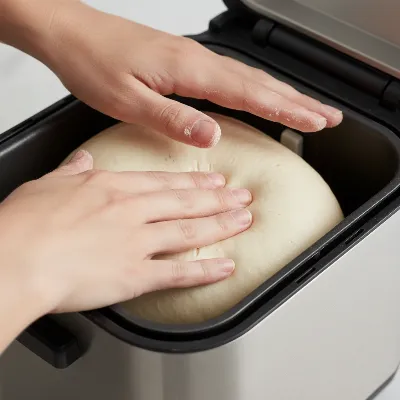 Hands checking the consistency of bread dough in a bread maker pan during the kneading cycle to prevent collapsed loaves
Expert Insight:
“A common pitfall for new bread machine users is straying from precise measurements. Baking is chemistry, and even a slight deviation in yeast or liquid can throw off the delicate balance, leading to a collapsed loaf. Trust your scale, not just your measuring cups.”
Preventing Future Collapses: Best Practices
- Weigh Ingredients for Accuracy: While measuring cups are common, weighing your ingredients (especially flour) with a kitchen scale provides far greater accuracy. A cup of flour can vary significantly in weight depending on how it’s scooped, whereas a gram is always a gram. This precision dramatically reduces the chances of an ingredient imbalance.
- Store Ingredients Properly: Keep your yeast in an airtight container in the refrigerator or freezer. Store flour in a cool, dark, and airtight location to prevent it from absorbing moisture or going stale. Fresh ingredients are the foundation of good bread.
- Understand Your Machine: Take the time to read your bread maker’s manual. Familiarize yourself with its different cycles, recommended ingredient capacities, and any specific loading instructions. Each machine has its quirks and optimal uses.
- Keep a Baking Journal: Note down the recipe, any adjustments you made (e.g., added 1 tbsp flour, reduced ¼ tsp yeast), the weather conditions (humid/dry), and the outcome. This journal becomes an invaluable tool for identifying patterns and refining your process for perfect loaves every time.
Conclusion
The journey to consistently perfect bread machine loaves, free from the disappointment of a collapsed top, is an achievable one. By understanding the critical role of ingredient ratios, paying close attention to environmental factors, and familiarizing yourself with your machine’s nuances, you can transform your baking experience. Remember, precision in measurement, observing your dough, and making small, informed adjustments are your best allies. Don’t be discouraged by a few less-than-perfect loaves; each one is a learning opportunity. Embrace the process, experiment with confidence, and soon you’ll be pulling out beautifully risen, delicious homemade bread every single time. What’s your go-to bread machine tip for avoiding a collapsed loaf? Share your insights below!
Frequently Asked Questions
Why does my bread maker loaf collapse after rising perfectly?
This often indicates over-proofing, a common issue where the yeast has been excessively active for too long. The gluten structure, stretched beyond its capacity, can no longer hold the gas produced by the yeast. This leads to the dough collapsing, either during its final rise or early in the baking cycle. Factors like too much yeast, sugar, liquid, or an overly warm environment can contribute to this over-fermentation.
Can too much water cause bread to collapse in a bread machine?
Yes, absolutely. An excess of water creates a dough that is too slack and weak. This compromises the formation of a strong gluten network, which is essential for trapping the carbon dioxide gas produced by the yeast. Without a robust structure, the dough struggles to maintain its shape as it rises, resulting in a sunken or collapsed loaf, particularly noticeable as a crater in the center.
Does high altitude affect bread machine baking and cause collapsing?
Yes, high altitude significantly impacts bread making in a bread machine. At higher elevations, the lower atmospheric pressure causes dough to rise faster and often more dramatically than at sea level. This accelerated rise can easily lead to over-proofing, where the dough expands too quickly and then collapses. To counteract this, high-altitude recipes typically require adjustments such as reducing the amount of yeast, slightly increasing liquids, and sometimes even making minor flour adjustments.
Frequently Asked Questions
Why does my bread maker loaf collapse after rising perfectly?
A bread maker loaf collapsing after rising perfectly often indicates over-proofing, where the yeast has been excessively active. The gluten structure, stretched beyond its capacity, can no longer hold the gas produced by the yeast, leading to collapse during the final rise or early baking cycle. Too much yeast, sugar, liquid, or an overly warm environment can contribute to this issue.
Can too much water cause bread to collapse in a bread machine?
Yes, too much water can definitely cause bread to collapse in a bread machine. An excess of water creates a dough that is too slack and weak, compromising the formation of a strong gluten network. Without a robust structure, the dough struggles to maintain its shape as it rises, resulting in a sunken or collapsed loaf, often with a crater in the center.
Does high altitude affect bread machine baking and cause collapsing?
Yes, high altitude significantly impacts bread making in a bread machine. At higher elevations, lower atmospheric pressure causes dough to rise faster and more dramatically. This accelerated rise can easily lead to over-proofing, where the dough expands too quickly and then collapses. High-altitude recipes typically require adjustments like reducing yeast, slightly increasing liquids, and sometimes minor flour adjustments.
What is the ideal liquid temperature for yeast activity in a bread maker?
The ideal liquid temperature for yeast activity in a bread maker is typically between 100-110u00b0F (38-43u00b0C). Liquid that is too hot will kill the yeast, preventing any rise, while liquid that is too cold will slow yeast activity significantly. Using a thermometer ensures you hit this sweet spot for optimal fermentation.
How does salt prevent a bread maker loaf from collapsing?
Salt is a crucial ingredient that helps control yeast activity and strengthens the gluten network in bread dough. It slows down fermentation, preventing the yeast from over-proofing the dough too quickly. By strengthening the gluten, salt provides essential structure, allowing the dough to maintain its shape as it rises and bakes, thereby preventing collapse.
Stop Your Bread Maker Loaf From Collapsing
Follow these steps to troubleshoot and prevent your bread maker loaf from collapsing, ensuring perfectly risen bread every time.
Double-check every ingredient amount and proportion in your recipe. Ensure you are using appropriate measuring cups for liquids and dry ingredients to maintain accuracy.
Confirm that your yeast is within its expiry date and stored correctly, ideally in the refrigerator or freezer. Old or inactive yeast is a common cause of poor rise and collapse. Also, ensure your flour is fresh.
Use a thermometer to ensure your water or milk is lukewarm, specifically between 100-110u00b0F (38-43u00b0C). This temperature range is optimal for yeast activation; liquids that are too hot or too cold can hinder yeast activity.
During the first 5-10 minutes of the kneading cycle, open the lid and observe the dough ball. If it's too sticky, add 1 tablespoon of bread flour at a time; if too dry, add 1 teaspoon of warm water until it forms a soft, pliable ball. This real-time adjustment is crucial.
If collapses persist, try reducing yeast by u00bc to u00bd teaspoon, or liquid by 1-2 tablespoons. If the bread tastes bland, add u00bc teaspoon more salt. Make only one adjustment at a time to isolate the cause of the collapse.

I always blamed the humidity in my kitchen for my bread maker woes, but it turns out I was using the wrong machine settings! I switched to a rapid bake cycle when I should have been using a basic white bread setting for my recipe. My latest loaf came out beautifully risen and airy. So glad I found this advice before giving up on my bread maker entirely.
I’ve been struggling with my bread maker loaves collapsing for months, and I finally figured out it was my yeast! I was using too much active dry yeast for the amount of flour. After reading about the ingredient imbalances, I adjusted my measurements, and my last two loaves have been perfect. It’s amazing how a small change can make such a big difference.
This was helpful for understanding why my bread was sinking in the middle. I thought it was just my machine, but it sounds like I need to pay more attention to the liquid-to-flour ratio. My only complaint is that I wish there were more specific examples of how to adjust for different types of flour. Still, it gave me a good starting point.
The tip about environmental factors was a game-changer for me. I live in a really warm climate, and I never considered that the high temperature could be over-proofing my dough. Moving my bread maker to a cooler spot in the kitchen and slightly reducing the yeast has completely solved my collapsing loaf problem. My family is thrilled with the consistent results!