The irresistible aroma of freshly baked bread filling your home is one of life’s simple pleasures, made effortlessly possible by a trusty bread maker. But what happens when your loyal kitchen companion starts to falter, its kneading paddle stubbornly refusing to turn? Often, the culprit is a worn or broken drive belt, a small but vital component responsible for the magic of dough creation. Don’t let a faulty belt banish homemade loaves from your table. With a few basic tools and a careful approach, replacing your bread maker’s drive belt is a manageable DIY repair that can bring your appliance back to life, saving you money and ensuring a steady supply of delicious bread.
Understanding Your Bread Maker’s Drive Belt
At the heart of every bread maker’s kneading function lies the drive belt. This essential part transfers power from the motor to the kneading paddle shaft, allowing your machine to mix and knead dough effectively. When this belt degrades or breaks, the paddle loses its ability to turn, or it may move erratically, leading to poorly mixed ingredients or unfinished cycles.
Recognizing the signs of a failing drive belt is the first step toward a successful repair. You might notice the kneading paddle no longer turns at all, or it might move inconsistently. Another common indicator is unusual noise during operation, such as a grinding or squealing sound, which suggests the belt is slipping or rubbing. In some cases, the machine might even stop mid-cycle, failing to complete its task. Visually inspecting the belt can also reveal issues; look for cracks, fraying, stretching, or a complete break. Any of these symptoms point towards a drive belt that needs attention.
Essential Tools and Safety Precautions
Before you begin any repair work on an electrical appliance, safety is paramount. Always ensure your bread maker is completely unplugged from the power outlet before you touch any internal components. This crucial step prevents electric shock and ensures a safe working environment.
Gathering your tools in advance will make the process smoother. You’ll typically need a set of screwdrivers, including Phillips and possibly flathead types, as most bread makers are assembled with these. Pliers might be useful for grasping stubborn connections or removing any tangled debris. While optional, wearing gloves can provide better grip and protect your hands. Of course, the most critical item is the correct replacement drive belt for your specific bread maker model. Ensure you have the right belt before disassembling your machine.
Step-by-Step Guide to Drive Belt Replacement
Replacing the drive belt on your bread maker is a straightforward process, but it requires patience and attention to detail.
1. Disconnect Power and Prepare Your Workspace
|
Our Picks for the Best Bread Maker in 2026
As an Amazon Associate I earn from qualifying purchases.
|
||
| Num | Product | Action |
|---|---|---|
| 1 | MERIOR 25-IN-1 Bread Maker with Visible Lid | 2lb Automatic Machine, Auto Nut Dispenser, 13-Hour Delay Timer, One-Touch Control & Recipes – Easy Operation, High Success for Homemade Bread |

|
| 2 | Zojirushi BB-PDC20BA Home Bakery Virtuoso Plus Breadmaker, 2 lb. loaf of bread |
|
| 3 | Rosewill 25-in-1 Automatic Bread Maker Machine with 3 Loaf Size up to 2 Lb, 700W High Power Dual Heater Bread Maker with BPA-free Nonstick Coating Pan, Max 15 Hours Delay Timer, Low Noise - Gray |
|
| 4 | Cuisinart Bread Maker Machine, Stainless Steel Convection Bread Machine with 16 Menu Options, 3 Loaf Sizes Up to 2 Lb., 3 Crust Colors, Includes Measuring Cup, Spoon & Kneading Hook, CBK-210 |
|
| 5 | 2LB Bread Maker Machine, OSIPOTO 17 in 1 Automatic Stainless Steel Bread Machine, Non-stick, Beginner-Friendly Controls, 15 Hour Timer, Easy to Clean Low Noise, High Success Rate for Homemade Bread |
|
| 6 | Bread Maker, 2.2LB 16-in-1 Bread Machine, Automatic Bread Maker Machine with Nonstick Ceramic Pan & 15H Timer & 1H Keep Warm for Beginner, Breadmaker with Gluten-Free, French, Yogurt, Recipe |
|
| 7 | Elite Gourmet Programmable Bread Maker, 2 lb Loaf, 3 Sizes, 19 Presets incl. Gluten-Free, Dough & Jam, Delay Timer, Black |
|
| 8 | Cuisinart Bread Maker Machine, Stainless Steel Automatic Bread Machine with 12 Menu Options, 3 Loaf Sizes up to 2 Lb., 3 Crust Colors, Removable Nonstick Baking Pan & Kneading Paddle, CBK-110NAS |
|
| 9 | 25-in-1 Bread Maker Machine with Automatic Dual Dispenser, 2LB Stainless Steel Breadmaker with Gluten-Free, Dough, Jam, Yogurt etc Settings, Silver |
|
| 10 | Elite Gourmet Programmable Bread Maker, 2 lb Loaf, 3 Sizes, 19 Presets incl. Gluten-Free, Dough & Jam, Delay Timer, Mint |
|
The very first and most important step is to unplug your bread maker from the electrical outlet. Once the power is disconnected, clear a clean, well-lit workspace where you can comfortably lay out your tools and the bread maker’s components. Having a small container for screws can prevent them from getting lost.
2. Access the Internal Components
To reach the drive belt, you’ll need to open the bread maker’s casing. Carefully turn the appliance over. Most bread makers have a bottom panel secured by several screws. Locate and remove all the screws from this panel. Once the screws are out, gently lift and remove the cover. Some models might require additional disassembly, such as removing the top lid or control panel, to fully access the internal mechanism. If you encounter resistance, check for hidden screws or clips.
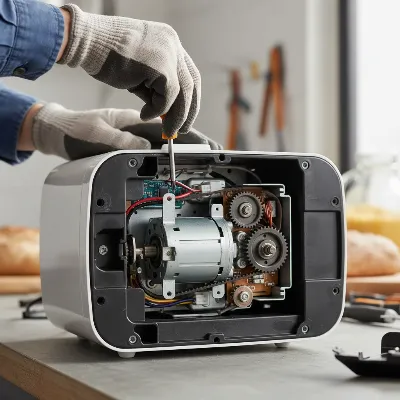 Bread maker turned over with bottom panel being unscrewed for drive belt access
3. Locate and Remove the Old Drive Belt
With the internal components exposed, you should be able to clearly see the motor, the kneading shaft pulley (a larger wheel), and the smaller motor pulley. The drive belt connects these two pulleys. Observe how the old belt is routed. If the belt is broken, carefully remove any fragments that might be wrapped around the pulleys or caught in the mechanism. If the belt is still intact but worn, gently pry it off one of the pulleys, then completely remove it. Take a moment to clean any accumulated crumbs, flour, or old rubber residue from the pulleys and surrounding area.
4. Install the New Drive Belt
Now, it’s time to install the new drive belt. Begin by placing the belt over the smaller motor pulley first. This usually makes it easier to stretch the belt into position. Next, carefully stretch the belt over the larger kneading shaft pulley. Ensure the belt is properly seated in the grooves of both pulleys. The belt should feel taut, but not excessively tight, as too much tension can cause premature wear on the motor or belt. A key detail to note for many models is that the teeth on the drive belt should face outwards, engaging with the ridged interior of the pulleys.
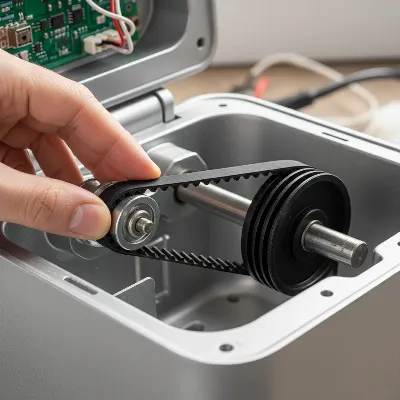 New drive belt being installed onto bread maker pulleys for repair
5. Verify Alignment and Reassemble
Once the new belt is in place, manually rotate the kneading shaft a few times. This helps to ensure the belt is properly aligned, seated correctly, and moves smoothly without slipping or rubbing against any internal components or the casing. After verifying the belt’s movement, carefully reassemble the bread maker’s casing. Make sure all wires are tucked away and not pinched by the cover. Replace and securely tighten all the screws you removed earlier. Do not overtighten, but ensure the casing is snug.
6. Test Your Bread Maker
With the bread maker fully reassembled, plug it back into a power outlet. Perform a short test cycle, such as a basic kneading cycle, to confirm proper operation. Watch and listen for smooth movement of the kneading paddle and the absence of any unusual noises. If everything functions correctly, congratulations – you’ve successfully replaced your bread maker’s drive belt!
Troubleshooting Common Issues After Belt Replacement
Even after a careful replacement, you might encounter a few hiccups. If the kneading paddle still isn’t turning, or is turning erratically, unplug the machine and re-open it to check the belt’s seating and tension. It might not be fully seated in the pulley grooves or could be too loose. If you hear unusual noises, re-inspect the alignment of the belt and check for any debris that might have been overlooked. Sometimes, the problem might lie beyond the drive belt, perhaps with the motor itself or other electrical components. In such cases, if the issue persists after re-verifying the belt installation, professional repair might be necessary.
Maintaining Your Bread Maker for Longevity
To ensure your newly installed drive belt and bread maker enjoy a long life, a few maintenance tips can go a long way. Regularly clean your machine, especially around the kneading shaft, to prevent flour or dough buildup that could strain the drive mechanism. Always adhere to the manufacturer’s recommended ingredient capacities; overloading the bread pan puts excessive stress on the motor and belt, leading to premature wear. Finally, store your bread maker in a dry, cool place away from extreme temperatures, which can degrade rubber components over time.
Conclusion
Bringing your bread maker back to life by replacing its drive belt is a rewarding DIY project that empowers you to keep enjoying delicious, homemade bread. By understanding the signs of a worn belt, preparing with the right tools, and following a methodical, safety-conscious approach, you can restore your appliance’s functionality with confidence. It’s a testament to how a small repair can have a significant impact on your kitchen routine, ensuring countless more loaves of warm, fragrant bread for you and your loved ones. So, what delicious new bread recipe will you try first with your revived bread maker?
Frequently Asked Questions
What kind of replacement belt do I need for my bread maker?
You need a belt specifically designed for your bread maker’s make and model. Check your appliance’s user manual or the manufacturer’s website for part numbers, or search online retailers using your bread maker’s brand and model number to find compatible replacement belts.
How often should a bread maker drive belt be replaced?
The lifespan of a drive belt varies depending on usage frequency and conditions. There’s no fixed schedule, but generally, belts last for several years. Replace it when you notice symptoms of wear, such as slipping, noise, or breakage.
Can I use a regular rubber band or a generic belt for replacement?
No, it’s strongly advised against using regular rubber bands or generic belts. Bread maker drive belts are designed with specific dimensions, materials, and often teeth for precise power transmission. Using an unsuitable alternative can damage your machine, lead to ineffective kneading, or even pose a safety risk.
What if my bread maker uses gears instead of a belt?
While most modern bread makers use a drive belt, some older or heavy-duty models might employ a gear system. If your bread maker uses gears, the repair process will be different and likely more complex, involving gear replacement rather than a belt. Consult your specific model’s service manual or a professional.
Is it worth repairing an old bread maker, or should I just buy a new one?
Repairing a bread maker, especially a simple belt replacement, is often more cost-effective and environmentally friendly than buying a new one. If the motor is still strong and other components are in good condition, a new drive belt can extend its life significantly for a fraction of the cost of a new appliance.
