Minor scratches on a bread maker pan do not always mean it’s ruined or unsafe; modern non-stick pans (post-2013) are typically PFOA-free, and small ingested flakes are considered inert. You can safely clean and prolong the life of a scratched pan using gentle DIY methods like warm soapy water soaks, baking soda paste, or vinegar solutions to remove sticky residues and improve non-stick performance.
Understanding Scratched Bread Maker Pans: Causes and Concerns
Scratches on your bread maker pan are an inevitable part of its lifecycle, often developing from consistent use and sometimes from less-than-ideal cleaning or handling. Understanding why these marks appear and what they truly mean for your health and baking is the first step toward effective care.
What Causes Scratches?
The primary culprits behind a scratched bread maker pan are usually everyday kitchen habits. Metal utensils, while convenient, are notorious for scraping against delicate non-stick coatings. Even small contact can create tiny abrasions that accumulate over time. Similarly, abrasive cleaning tools, like steel wool or harsh scouring pads, can strip away the non-stick layer, leaving it vulnerable. General wear and tear, especially if the pan isn’t stored carefully and rubs against other kitchen items, also contributes to surface damage. For expert home kitchen reviews on this site.
Are Scratched Pans Safe? Addressing the Health Debate
The safety of using a scratched non-stick pan is a common concern among home cooks. Fortunately, for modern bread maker pans manufactured after 2013, the health risks associated with minor scratches are generally considered low. These newer pans are typically made without Perfluorooctanoic acid (PFOA), a chemical previously used in some non-stick coatings that raised health concerns when pans were overheated. If small flakes of the non-stick coating from a PFOA-free pan are ingested, they are usually considered inert and pass through the body without harm.
However, there’s a crucial caveat: overheating. While bread maker pans typically don’t reach the extreme temperatures (above 500°F or 260°C) that can cause non-stick coatings to break down and release potentially harmful fumes, it’s always wise to avoid excessive heat. The main practical downside of scratches isn’t necessarily a health hazard, but rather a diminished non-stick performance, leading to bread sticking and a more challenging cleanup.
When is it Time to Let Go?
While minor scratches are often manageable, there comes a point when a bread maker pan is simply beyond safe and effective repair. You should consider replacing your pan if you observe:
- Extensive flaking: If large pieces of the non-stick coating are visibly peeling or flaking off into your bread, it’s time for a replacement.
- Severe damage: Deep gouges that expose significant amounts of the underlying metal, or if the pan is warped or heavily discolored, indicate its structural integrity and performance are compromised.
- Persistent sticking: Even after thorough cleaning and attempting revival methods, if your bread consistently sticks and becomes difficult to remove, the non-stick properties are likely exhausted.
- Age: Many non-stick pans have a general lifespan of about five years. If your pan is significantly older and showing wear, it might be more practical to invest in a new one.
Essential Preparations for Safe Cleaning
Before you dive into cleaning your scratched bread maker pan, taking a few preparatory steps will ensure both your safety and the effectiveness of the process. Remember, gentle care is paramount when dealing with delicate non-stick surfaces.
Safety First
|
Our Picks for the Best Bread Maker in 2026
As an Amazon Associate I earn from qualifying purchases.
|
||
| Num | Product | Action |
|---|---|---|
| 1 | Elite Gourmet Programmable Bread Maker, 2 lb Loaf, 3 Sizes, 19 Presets incl. Gluten-Free, Dough & Jam, Delay Timer, Mint |

|
| 2 | Zojirushi BB-PDC20BA Home Bakery Virtuoso Plus Breadmaker, 2 lb. loaf of bread |
|
| 3 | Cuisinart Bread Maker Machine, Stainless Steel Convection Bread Machine with 16 Menu Options, 3 Loaf Sizes Up to 2 Lb., 3 Crust Colors, Includes Measuring Cup, Spoon & Kneading Hook, CBK-210 |
|
| 4 | Cuisinart Bread Maker Machine, Stainless Steel Automatic Bread Machine with 12 Menu Options, 3 Loaf Sizes up to 2 Lb., 3 Crust Colors, Removable Nonstick Baking Pan & Kneading Paddle, CBK-110NAS |
|
| 5 | 2LB Bread Maker Machine, OSIPOTO 17 in 1 Automatic Stainless Steel Bread Machine, Non-stick, Beginner-Friendly Controls, 15 Hour Timer, Easy to Clean Low Noise, High Success Rate for Homemade Bread |
|
| 6 | MERIOR 25-IN-1 Bread Maker with Visible Lid | 2lb Automatic Machine, Auto Nut Dispenser, 13-Hour Delay Timer, One-Touch Control & Recipes – Easy Operation, High Success for Homemade Bread |
|
| 7 | 25-in-1 Bread Maker Machine with Automatic Dual Dispenser, 2LB Stainless Steel Breadmaker with Gluten-Free, Dough, Jam, Yogurt etc Settings, Silver |
|
| 8 | Bread Maker, 2.2LB 16-in-1 Bread Machine, Automatic Bread Maker Machine with Nonstick Ceramic Pan & 15H Timer & 1H Keep Warm for Beginner, Breadmaker with Gluten-Free, French, Yogurt, Recipe |
|
| 9 | Rosewill 25-in-1 Automatic Bread Maker Machine with 3 Loaf Size up to 2 Lb, 700W High Power Dual Heater Bread Maker with BPA-free Nonstick Coating Pan, Max 15 Hours Delay Timer, Low Noise - Gray |
|
| 10 | Elite Gourmet Programmable Bread Maker, 2 lb Loaf, 3 Sizes, 19 Presets incl. Gluten-Free, Dough & Jam, Delay Timer, Black |
|
Your bread maker is an electrical appliance, so always prioritize safety. Before attempting any cleaning, unplug the machine from the power outlet. This eliminates any risk of accidental activation or electrical shock. Also, ensure the bread pan is completely cool to the touch. Washing a hot pan with cold water can lead to thermal shock, which may warp the pan and further damage its non-stick coating.
Gather Your Tools
You likely already have most of the necessary items for a safe and effective DIY cleaning in your kitchen. Stocking up on the right tools will prevent further damage and maximize your cleaning efforts:
- Mild Dish Soap: Choose a gentle formula that won’t strip away coatings.
- Soft Sponge or Cloth: Microfiber cloths, soft dishcloths, or sponges with a non-abrasive side (often blue and wavy-edged, indicating they are Teflon-safe) are ideal.
- Plastic or Silicone Scraper: For dislodging stubborn, baked-on bits without scratching.
- Baking Soda: A natural abrasive that’s gentle yet effective.
- White Vinegar: Excellent for dissolving mineral deposits, grease, and odors.
- Water: Warm water is crucial for soaking and rinsing.
- Paper Towels or Dry Cloths: For wiping and drying the pan.
By having these simple items ready, you’re well-equipped to tackle the challenge of a scratched bread maker pan safely and effectively.
DIY Cleaning Methods to Tackle Stubborn Residue
Even with scratches, sticky or burnt-on residue is often the immediate problem, making bread difficult to remove. Thankfully, several gentle, DIY methods can help you clean your bread maker pan effectively without causing further damage.
Gentle Warm Soapy Water Soak
This is your first line of defense against most food residues and a fundamental step before trying more intensive methods.
- Cool Down: Ensure your bread maker pan is completely cool.
- Fill and Soak: Fill the pan with warm water and add a few drops of mild dish soap. Let it soak for at least 15-30 minutes, or even longer for very stubborn messes. The warm, soapy water will help loosen and rehydrate dried-on dough or crumbs.
- Gentle Scrub: After soaking, use a soft sponge or cloth to gently scrub the interior of the pan. Avoid any harsh scrubbing pads or metal brushes.
- Rinse and Dry: Rinse the pan thoroughly with warm water to remove all soap and food particles. Dry immediately with a soft towel to prevent water spots.
The Power of Baking Soda Paste
For burnt-on food or tougher sticky spots that warm soapy water alone can’t conquer, baking soda offers a slightly abrasive yet safe solution.
- Create the Paste: In the cooled bread pan, mix 2-3 tablespoons of baking soda with just enough water to form a thick paste.
- Apply and Wait: Spread the baking soda paste over the affected areas, ensuring it covers any burnt-on residue or particularly sticky spots. Let the paste sit for 15-30 minutes, allowing it to work on loosening the grime. For very stubborn areas, you can let it sit for a few hours.
- Gentle Scrub and Rinse: Using a soft sponge or plastic scraper, gently scrub the paste and residue. The mild abrasive action of the baking soda should help lift the stubborn bits. Rinse the pan thoroughly with warm water and dry it.
Vinegar Solution for Sticky Build-up and Odors
White vinegar is a fantastic natural cleaner, particularly effective against greasy build-up, mineral deposits, and lingering odors. It can also help restore some of the pan’s slickness by removing old oil residues.
- Prepare the Solution: Pour enough water into the bread pan to cover the bottom and any affected areas. Add about 2 tablespoons of white vinegar for every cup of water.
- Heat Gently: Place the pan on your stovetop over medium heat and bring the mixture to a gentle boil. Let it simmer for 5-10 minutes, stirring occasionally with a wooden or silicone spoon. The steam and acidity will help loosen sticky films and neutralize odors.
- Cool and Clean: Remove the pan from the heat and allow the solution to cool completely. Once cool, pour out the mixture and wash the pan with mild dish soap and a soft sponge. Rinse thoroughly and dry.
Salt and Vinegar Deep Clean
For those particularly challenging, sticky residues that seem welded to the pan, a combination of vinegar and coarse salt can be surprisingly effective. This method is a bit more hands-on but still gentle enough for non-stick surfaces when used carefully.
- Vinegar Soak (Initial): Start by pouring water and 2 tablespoons of white vinegar into the pan and bring it to a boil on the stovetop for about 5 minutes. This helps dissolve initial oil residue and oxidation.
- Drain and Add Salt: Pour out the vinegar solution. While the pan is still warm (but not scorching hot), add about 1 tablespoon of coarse salt (like sea salt or kosher salt) to the pan.
- Scrub with Salt: Use a paper towel or a soft cloth to gently scrub the pan with the salt. The salt acts as a natural, mild abrasive that helps dislodge sticky particles without being as harsh as metal scrubbers.
- Rinse and Dry: Rinse the pan thoroughly with warm water to remove all salt and residue, then dry completely with a soft cloth.
Reinvigorating Your Pan: Beyond Just Cleaning
While you cannot truly “repair” a deeply scratched non-stick coating, you can often improve its performance and reduce sticking after a thorough cleaning. These methods aim to replenish a protective layer on the surface.
The “Re-seasoning” Approach for Non-Stick Pans
When non-stick pans start to stick, it’s often due to a build-up of invisible, hardened oil and food residues, rather than a complete loss of the coating. “Re-seasoning” in this context is less about repairing damage and more about stripping away old, sticky layers and applying a fresh, slick film of oil. This can significantly improve the pan’s non-stick properties, even if some scratches remain.
- Thorough Cleaning: Begin by thoroughly cleaning your pan using one of the methods above (e.g., vinegar soak or baking soda paste) to remove all existing residue. The pan must be completely clean and dry before proceeding.
- Heat the Pan: Place the clean, dry bread pan on your stovetop over medium heat for 2-3 minutes. This opens up the pores of the metal beneath the coating.
- Apply Oil: Remove the pan from the heat. Pour 1-2 teaspoons of a high smoke point cooking oil (such as vegetable, canola, grapeseed, or avocado oil) into the pan.
- Coat Evenly: Using a paper towel, carefully wipe the oil around the entire interior surface of the pan, including the sides. Make sure it’s a very thin, even layer, not pooled.
- Heat Again: Return the pan to the stovetop over low to medium heat. Heat for 1-2 minutes, or until you see a wisp of smoke. This helps polymerize the oil, creating a new, slick layer.
- Cool and Wipe: Turn off the heat and let the pan cool completely. Once cool, wipe away any excess oil with a clean paper towel. The surface should now feel smoother and more non-stick. Repeat this process every few months or as needed.
> “While you can’t restore a severely damaged non-stick coating, re-seasoning with oil after a deep clean can significantly improve a pan’s slickness by creating a new, temporary barrier.” — Admin, ReviewStank.com, Bread Maker Technician
The Milk Method (Optional/Experimental)
Some DIY enthusiasts suggest using milk to help restore a pan’s slickness, especially for minor wear. The idea is that proteins in the milk can create a thin, protective layer. While less scientifically proven for non-stick coatings, it’s a gentle method you might consider for light issues.
- Pour Milk: Pour about half a cup of fresh milk into the clean bread pan, just enough to coat the bottom.
- Gentle Boil: Place the pan on the stovetop over medium heat and bring the milk to a gentle boil. Watch carefully, as milk can boil over quickly.
- Cool and Wipe: Once it starts bubbling, turn off the heat and let the milk cool completely in the pan. As it cools, the proteins are thought to bond with the surface. Pour out the milk, rinse the pan with warm water, and dry thoroughly.
Preventing Future Scratches and Extending Pan Life
An ounce of prevention is worth a pound of cure, especially when it comes to delicate non-stick coatings. Adopting mindful habits in your kitchen can significantly prolong the life of your bread maker pan and keep scratches at bay.
Choosing the Right Utensils
This is perhaps the most critical step in preventing scratches. Always use wooden, silicone, or plastic utensils when interacting with your bread maker pan. Metal spatulas, spoons, or bread knives can easily scratch the non-stick surface, even with light contact. Reserve your metal tools for other cookware. This simple swap makes a huge difference in preserving the integrity of your pan.
Gentle Washing Habits
How you wash your pan matters just as much as what you use during baking.
- Hand Wash Only: Avoid putting your bread maker pan in the dishwasher. The harsh detergents, high heat, and aggressive water jets of dishwashers can degrade and strip away the non-stick coating over time, leading to premature wear and scratching.
- Mild Soap and Soft Sponge: Stick to mild dish soap and soft sponges or cloths for cleaning. Steer clear of abrasive cleaners, scouring pads, and steel wool, which will inevitably scratch the surface.
- Cool Down Completely: Always allow the pan to cool completely before washing it. Washing a hot pan can cause thermal shock, which may warp or damage the surface.
Proper Storage
Even when clean, a bread pan can get scratched if not stored correctly. To avoid accidental damage:
- Protect the Surface: If stacking pans, place a paper towel, cloth, or pan protector between them to prevent metal-on-metal contact.
- Dedicated Space: If possible, store your bread maker pan in a space where it won’t be jostled against other metal cookware or sharp objects.
By consistently applying these preventive measures, you can significantly reduce the likelihood of new scratches appearing and enjoy your bread maker pan for years to come.
Troubleshooting Common Issues
Even with the best cleaning efforts, you might encounter lingering issues with a scratched bread maker pan. Understanding these common problems and knowing when to replace your pan is crucial for continued baking success.
Why is my bread still sticking after cleaning?
If your bread continues to stick even after thoroughly cleaning and attempting re-seasoning, it’s a clear sign that the non-stick coating is likely too compromised to recover. While DIY methods can improve minor stickiness caused by residue, they cannot repair significant damage or a worn-out coating. Deep scratches expose the underlying metal, creating surfaces that dough naturally clings to. At this point, no amount of cleaning or oil application will restore the original non-stick functionality.
When to Replace Your Bread Maker Pan
Knowing when to replace your bread maker pan is essential for both your baking results and peace of mind. Consider purchasing a new pan if:
- Visible Flaking: You regularly see small flakes of the non-stick coating in your finished bread. Even if modern coatings are considered non-toxic, nobody wants to eat pan particles.
- Extensive Scratching/Peeling: The pan has numerous deep scratches, or the coating is visibly peeling or bubbling in large areas.
- Persistent Sticking: Despite your best efforts with cleaning and re-seasoning, bread consistently sticks, making removal difficult and often tearing the loaf.
- Warping or Deformity: The pan is warped, misshapen, or no longer fits securely into your bread maker, which can affect heat distribution and kneading.
- Age: As a general guideline, non-stick pans typically last around 3-5 years with regular use before their performance significantly degrades. If your pan is older and showing signs of wear, a new one might be a worthwhile investment.
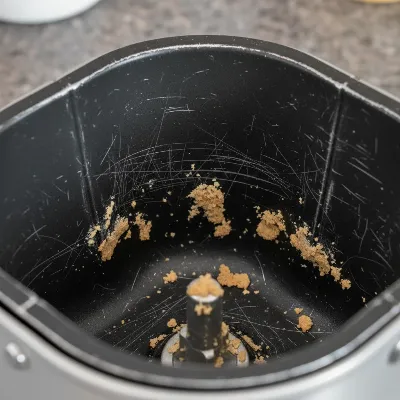 Close-up of a scratched non-stick bread maker pan with visible marks and a dough residue
Conclusion
A scratched bread maker pan can be a frustrating challenge for any home baker, but it doesn’t always signal the end of its useful life. By understanding the causes of scratches, embracing safe and gentle DIY cleaning methods like warm soapy soaks, baking soda pastes, and vinegar solutions, and carefully trying “re-seasoning” techniques, you can often restore your pan’s performance and enjoy many more delicious loaves. More importantly, adopting preventive measures—using the right utensils, hand washing with soft tools, and proper storage—will significantly extend the lifespan of your pan, keeping it in prime baking condition. With a little care and attention, you can keep that homemade bread coming and explore the delightful world of home baking without constant worry. What new bread recipe will you try first with your revived pan?
Frequently Asked Questions
Can I use steel wool on my bread maker pan?
No, absolutely not. Steel wool and other abrasive scrubbers will severely scratch and permanently damage the non-stick coating of your bread maker pan, making it more prone to sticking and shortening its lifespan. Always opt for soft sponges or cloths.
How often should I clean my bread maker pan?
You should clean your bread maker pan after every use. A quick wash with warm, soapy water and a soft sponge is usually sufficient. Deep cleaning with baking soda or vinegar can be done periodically, perhaps once a month or as needed, to remove stubborn residue and maintain performance.
Is it okay if I ingest small flakes from a scratched pan?
For modern non-stick pans (made after 2013 and PFOA-free), ingesting small, incidental flakes of the coating is generally considered safe. These particles are inert and are expected to pass through your digestive system without causing harm. However, if large amounts are flaking, it’s time to replace the pan.
Can a scratched pan affect the taste of my bread?
While flakes from modern non-stick pans are unlikely to be toxic, they can certainly be unappetizing if you find them in your bread. The scratches themselves do not directly affect the taste of the bread, but they can cause dough to stick, leading to unevenly baked or torn loaves, which might indirectly impact your overall baking experience.
What’s the best type of oil for “re-seasoning” a non-stick pan?
When attempting to “re-season” a non-stick pan, it’s best to use a high smoke point cooking oil such as vegetable oil, canola oil, grapeseed oil, or avocado oil. These oils can withstand the heating process better and help create a more effective non-stick layer.
Are there truly “scratch-proof” bread maker pans?
While some newer non-stick technologies boast increased durability and scratch resistance (like certain ceramic or titanium-reinforced coatings), no non-stick pan is truly “scratch-proof.” With enough abrasive contact, any coating can eventually be damaged. Following best practices for care and using appropriate utensils will always be key to longevity.
Clean a Scratched Bread Maker Pan
Safely clean your scratched bread maker pan using gentle DIY methods to remove sticky residue and improve its non-stick performance.
Ensure your bread maker pan is completely cool. Fill the pan with warm water and add a few drops of mild dish soap. Let it soak for 15-30 minutes, or longer for stubborn messes, to loosen dried-on dough or crumbs. Gently scrub with a soft sponge, then rinse thoroughly and dry immediately.
In the cooled pan, mix 2-3 tablespoons of baking soda with enough water to form a thick paste. Spread the paste over affected areas and let it sit for 15-30 minutes, or a few hours for very stubborn grime. Gently scrub with a soft sponge or plastic scraper, then rinse thoroughly with warm water and dry.
Pour water into the pan to cover affected areas and add about 2 tablespoons of white vinegar per cup of water. Gently heat the mixture on the stovetop until it simmers for 5-10 minutes. Allow it to cool completely, then pour out the solution, wash with mild dish soap, rinse, and dry.
Pour water and 2 tablespoons of white vinegar into the pan and boil on the stovetop for 5 minutes. Drain the solution, then add about 1 tablespoon of coarse salt while the pan is still warm. Use a paper towel or soft cloth to gently scrub the pan with the salt. Rinse thoroughly with warm water and dry completely.
After thorough cleaning and drying, heat the pan on the stovetop over medium heat for 2-3 minutes. Remove from heat, add 1-2 teaspoons of high smoke point oil (like vegetable or canola), and wipe an even, thin layer around the interior. Heat again on low-medium for 1-2 minutes until a wisp of smoke appears. Cool completely and wipe away excess oil.

I was so worried when I saw those little scratches on my bread maker pan, thinking I’d have to buy a whole new machine. This advice about PFOA-free pans and how small flakes are inert really put my mind at ease. I tried the warm soapy water soak method, and it worked wonders on the sticky residue. My loaves are coming out perfectly again!
I’ve had my bread maker for about five years, and the scratches are starting to get noticeable. I tried the vinegar solution, and while it did clean some of the gunk, I still feel like the non-stick isn’t quite what it used to be. It’s a good temporary fix, but I might need to look into a replacement pan soon if it gets worse.
My bread maker is a workhorse, and after years of use, the pan definitely had some minor scratches. I appreciated the tip about using a baking soda paste. It really helped to get rid of some stubborn baked-on bits that were making my bread stick. It’s great to know I can extend the life of my pan without much hassle.
This was super helpful! I’ve always been careful with my bread maker, but some scratches just appeared over time. Knowing that modern pans are generally safe even with minor damage is a huge relief. I’m going to try the gentle cleaning methods mentioned to keep my pan in the best shape possible.