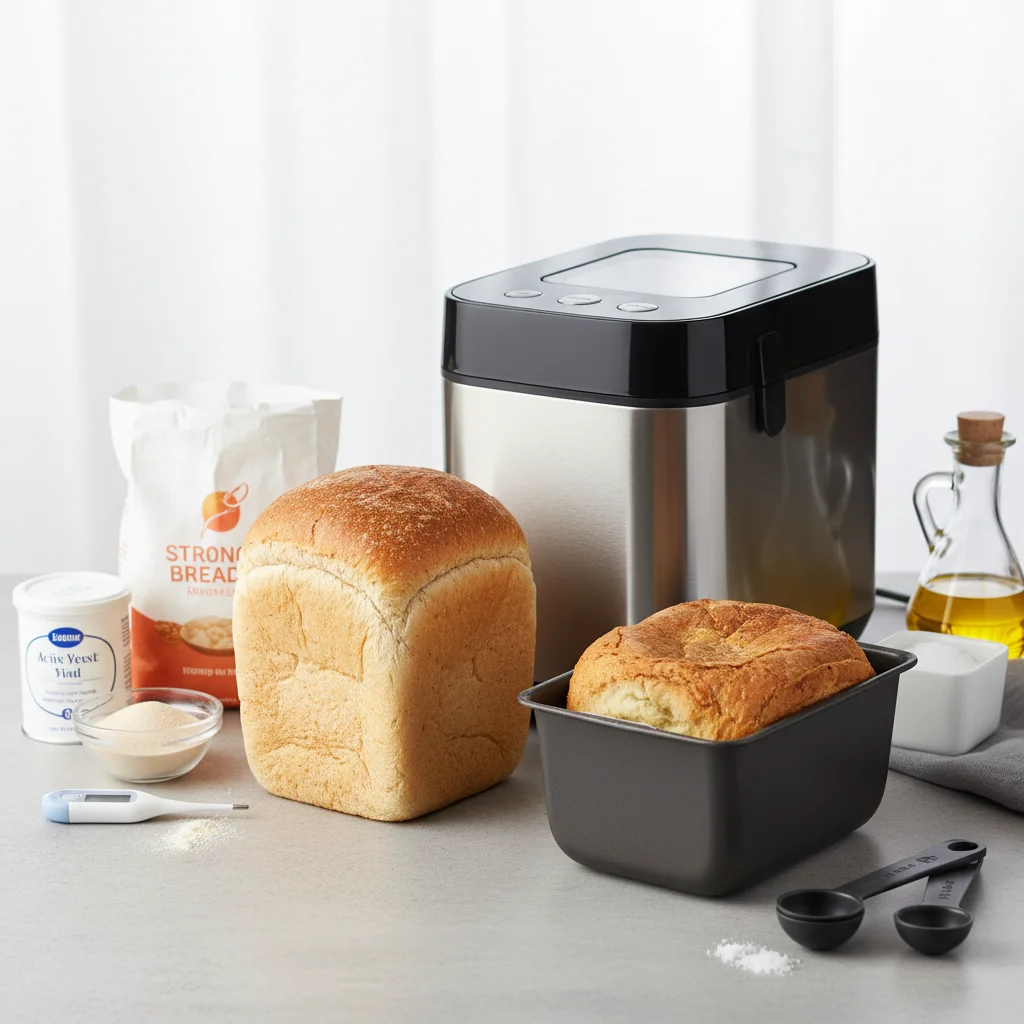
A collapsed loaf from your bread maker can be incredibly frustrating, but it’s a common issue with several identifiable causes. Typically, a sunken top or dense, caved-in center points to an imbalance in ingredients, incorrect yeast activity, or environmental factors. Understanding these underlying problems is the first step to consistently baking perfect loaves.
Common Causes of Collapsed Bread
The most frequent culprits behind a collapsed bread maker loaf include too much liquid, too much yeast, insufficient gluten development, or even high humidity. Each of these factors can disrupt the delicate balance required for a stable bread structure. For instance, an excess of water can make the dough too weak to hold its shape once it rises, leading to a collapse during or after baking.
Ingredient Imbalances: The Silent Saboteur
Precision in measuring ingredients is paramount. Too much liquid, whether water or milk, can lead to a very wet dough that rises too quickly and then collapses under its own weight. Conversely, too little flour can have a similar effect, as there isn’t enough structure to support the rise. Always use level measurements and consider weighing ingredients for maximum accuracy, especially with flour.
- Ensure accurate liquid-to-flour ratios.
- Check yeast freshness and quantity.
- Avoid adding extra ingredients without adjusting the base recipe.
- Consider the impact of high humidity on flour absorption.
- Use room temperature ingredients for optimal yeast activation.
Yeast Activity: Too Much or Too Little?
|
Our Picks for the Best Bread Maker in 2026
As an Amazon Associate I earn from qualifying purchases.
|
||
| Num | Product | Action |
|---|---|---|
| 1 | Zojirushi BB-PDC20BA Home Bakery Virtuoso Plus Breadmaker, 2 lb. loaf of bread |

|
| 2 | Cuisinart Bread Maker Machine, Stainless Steel Automatic Bread Machine with 12 Menu Options, 3 Loaf Sizes up to 2 Lb., 3 Crust Colors, Removable Nonstick Baking Pan & Kneading Paddle, CBK-110NAS |
|
| 3 | Bread Maker, 2.2LB 16-in-1 Bread Machine, Automatic Bread Maker Machine with Nonstick Ceramic Pan & 15H Timer & 1H Keep Warm for Beginner, Breadmaker with Gluten-Free, French, Yogurt, Recipe |
|
| 4 | Elite Gourmet Programmable Bread Maker, 2 lb Loaf, 3 Sizes, 19 Presets incl. Gluten-Free, Dough & Jam, Delay Timer, Black |
|
| 5 | Rosewill 25-in-1 Automatic Bread Maker Machine with 3 Loaf Size up to 2 Lb, 700W High Power Dual Heater Bread Maker with BPA-free Nonstick Coating Pan, Max 15 Hours Delay Timer, Low Noise - Gray |
|
| 6 | MERIOR 25-IN-1 Bread Maker with Visible Lid | 2lb Automatic Machine, Auto Nut Dispenser, 13-Hour Delay Timer, One-Touch Control & Recipes – Easy Operation, High Success for Homemade Bread |
|
| 7 | 2LB Bread Maker Machine, OSIPOTO 17 in 1 Automatic Stainless Steel Bread Machine, Non-stick, Beginner-Friendly Controls, 15 Hour Timer, Easy to Clean Low Noise, High Success Rate for Homemade Bread |
|
| 8 | Elite Gourmet Programmable Bread Maker, 2 lb Loaf, 3 Sizes, 19 Presets incl. Gluten-Free, Dough & Jam, Delay Timer, Mint |
|
| 9 | 25-in-1 Bread Maker Machine with Automatic Dual Dispenser, 2LB Stainless Steel Breadmaker with Gluten-Free, Dough, Jam, Yogurt etc Settings, Silver |
|
| 10 | Cuisinart Bread Maker Machine, Stainless Steel Convection Bread Machine with 16 Menu Options, 3 Loaf Sizes Up to 2 Lb., 3 Crust Colors, Includes Measuring Cup, Spoon & Kneading Hook, CBK-210 |
|
Yeast is the engine of your bread, but too much of a good thing can be detrimental. An overabundance of yeast will cause the dough to rise too rapidly and then exhaust itself, leading to a collapse. On the other hand, old or inactive yeast will result in a poor rise, creating a dense, heavy loaf that might also appear sunken. Always check the expiration date on your yeast and store it properly.
Environmental Factors and Program Settings
High humidity can cause flour to absorb more moisture, effectively increasing the liquid content in your dough. If you live in a humid climate, you might need to slightly reduce the liquid in your recipe. Additionally, using the wrong bread maker program for your specific recipe can lead to issues. Ensure you’re selecting the correct cycle (e.g., basic, whole wheat, sweet) as each has different kneading, rising, and baking times tailored to specific dough types.
Troubleshooting and Prevention Tips
To prevent future collapses, start by meticulously measuring your ingredients. If you suspect too much liquid, try reducing it by a tablespoon or two in your next batch. If yeast is the issue, test its activity by dissolving a teaspoon in warm water with a pinch of sugar; it should foam within 5-10 minutes. For consistent results, consider using a bread maker with a delayed start function to allow ingredients to come to room temperature naturally.Investing in a good kitchen scale can also dramatically improve your baking accuracy.
When to Adjust Your Recipe
Sometimes, the recipe itself might need minor adjustments. If you’re adding extra ingredients like nuts, seeds, or dried fruit, these can add weight and sometimes require a slight increase in flour or a decrease in liquid to maintain structural integrity. Always add these heavier ingredients at the ‘add-in’ signal of your bread maker, not at the very beginning.Experimenting with small changes and keeping notes on your results will help you fine-tune your recipes for perfect loaves every time.
