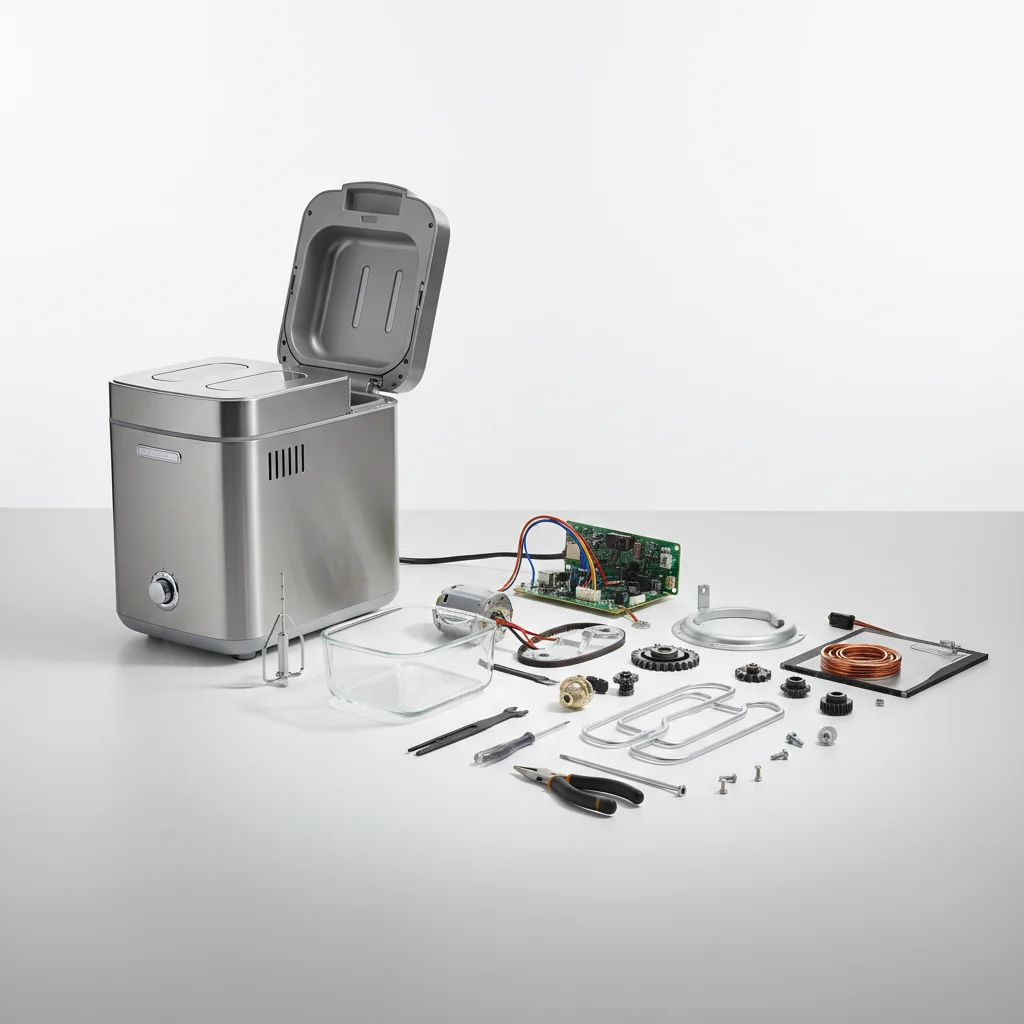
Deciding whether to repair a malfunctioning bread maker or invest in a new one can be a tricky decision. Generally, if the repair cost is less than 50% of a new unit’s price and the appliance is less than five years old, repair is often the more economical and environmentally friendly choice. However, for older models or significant issues, replacement might be the better long-term solution.
Common Bread Maker Problems and Their Solutions
Many bread maker issues are surprisingly simple to fix. For instance, if your bread maker isn’t mixing, check the paddle’s attachment and the drive belt. A loose or broken belt is a common culprit and can often be replaced at home with a readily available part. Similarly, if your bread isn’t rising, ensure your yeast is fresh and the heating element is functioning correctly. Sometimes, a simple reset can resolve minor electronic glitches.
- Paddle not turning: Check drive belt and paddle attachment.
- Bread not rising: Verify yeast freshness and heating element function.
- Machine not powering on: Inspect power cord and outlet, consider internal fuse.
- Loud noises during operation: Could indicate worn gears or motor issues.
- Uneven baking: Often related to heating element or sensor calibration.
When to Consider Professional Repair
While many minor issues can be DIY projects, some problems warrant professional attention. If your bread maker is emitting smoke, has exposed wiring, or the motor is making grinding noises, it’s safer to consult a qualified appliance repair technician. These issues can be dangerous to tackle without proper expertise and tools. A professional can accurately diagnose complex electrical or mechanical failures and ensure the repair is done safely and effectively.
Evaluating the Cost of Repair vs. Replacement
|
Our Picks for the Best Bread Maker in 2026
As an Amazon Associate I earn from qualifying purchases.
|
||
| Num | Product | Action |
|---|---|---|
| 1 | 25-in-1 Bread Maker Machine with Automatic Dual Dispenser, 2LB Stainless Steel Breadmaker with Gluten-Free, Dough, Jam, Yogurt etc Settings, Silver |

|
| 2 | MERIOR 25-IN-1 Bread Maker with Visible Lid | 2lb Automatic Machine, Auto Nut Dispenser, 13-Hour Delay Timer, One-Touch Control & Recipes – Easy Operation, High Success for Homemade Bread |
|
| 3 | Cuisinart Bread Maker Machine, Stainless Steel Automatic Bread Machine with 12 Menu Options, 3 Loaf Sizes up to 2 Lb., 3 Crust Colors, Removable Nonstick Baking Pan & Kneading Paddle, CBK-110NAS |
|
| 4 | Cuisinart Bread Maker Machine, Stainless Steel Convection Bread Machine with 16 Menu Options, 3 Loaf Sizes Up to 2 Lb., 3 Crust Colors, Includes Measuring Cup, Spoon & Kneading Hook, CBK-210 |
|
| 5 | Bread Maker, 2.2LB 16-in-1 Bread Machine, Automatic Bread Maker Machine with Nonstick Ceramic Pan & 15H Timer & 1H Keep Warm for Beginner, Breadmaker with Gluten-Free, French, Yogurt, Recipe |
|
| 6 | Elite Gourmet Programmable Bread Maker, 2 lb Loaf, 3 Sizes, 19 Presets incl. Gluten-Free, Dough & Jam, Delay Timer, Black |
|
| 7 | 2LB Bread Maker Machine, OSIPOTO 17 in 1 Automatic Stainless Steel Bread Machine, Non-stick, Beginner-Friendly Controls, 15 Hour Timer, Easy to Clean Low Noise, High Success Rate for Homemade Bread |
|
| 8 | Rosewill 25-in-1 Automatic Bread Maker Machine with 3 Loaf Size up to 2 Lb, 700W High Power Dual Heater Bread Maker with BPA-free Nonstick Coating Pan, Max 15 Hours Delay Timer, Low Noise - Gray |
|
| 9 | Zojirushi BB-PDC20BA Home Bakery Virtuoso Plus Breadmaker, 2 lb. loaf of bread |
|
| 10 | Elite Gourmet Programmable Bread Maker, 2 lb Loaf, 3 Sizes, 19 Presets incl. Gluten-Free, Dough & Jam, Delay Timer, Mint |
|
Before committing to a repair, get a quote for parts and labor. Compare this cost to the price of a new bread maker with similar features. For example, if a new mid-range bread maker costs $150, and the repair quote is $100, it might be more sensible to put that $100 towards a new, warrantied appliance. However, for high-end models, even a significant repair might be more cost-effective than buying a new premium unit. Consider the remaining lifespan of your current machine and the warranty period of any potential repair.
Signs It’s Time for a New Bread Maker
There are clear indicators that it’s time to replace your bread maker. If the machine is over seven years old, parts are becoming scarce, or you’re experiencing multiple, recurring problems, a new purchase is likely the best option. Constant breakdowns, a significantly degraded non-stick pan, or a motor that struggles with basic doughs are all strong signals. Additionally, if you’re looking for new features like gluten-free settings, custom programs, or a larger capacity, upgrading might be more beneficial than trying to adapt an older model.
Maximizing the Lifespan of Your New Appliance
Once you’ve made the decision to replace your bread maker, proper maintenance of your new appliance is key to extending its lifespan. Always follow the manufacturer’s cleaning instructions, avoid abrasive cleaners on the non-stick pan, and store the machine in a dry, cool place. Regularly check the paddle and pan for wear and tear, and address any minor issues promptly. This proactive approach can help prevent major breakdowns and ensure your new bread maker serves you well for years to come.
