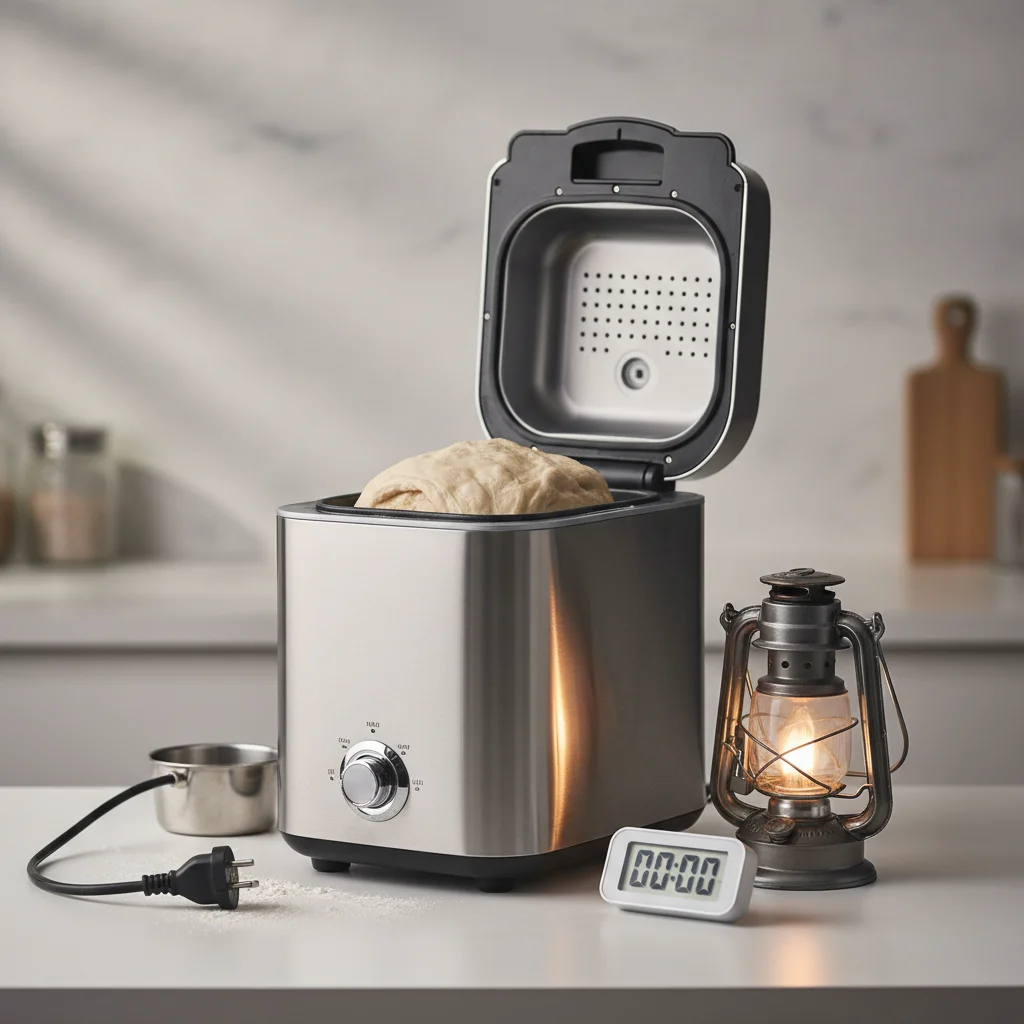
A sudden power outage during a bread maker cycle can be frustrating, but it doesn’t always mean a ruined loaf. The key to saving your bread lies in understanding the stage of the baking process when the power went out and acting quickly. Generally, if the outage is brief (under 15-20 minutes) and occurs during the kneading or early proofing stages, your loaf can often be salvaged with minimal intervention.
Assessing the Damage: When Did the Power Go Out?
The impact of a power outage on your bread maker’s cycle depends heavily on its timing. If the power cuts out during the initial mixing or kneading phase, the dough might just need a quick manual knead to re-incorporate ingredients before restarting the cycle. However, if it happens during the final rise or baking, the situation becomes more critical.
Most modern bread makers have a power interruption backup, typically lasting 5-10 minutes. Check your specific model’s manual to see if it has this feature and its duration. If the outage exceeds this window, the machine will reset, and you’ll need to intervene.
Saving Your Loaf During Kneading or First Rise
If the power outage occurs during the kneading or first rise, you have a good chance of saving your dough. First, check the dough’s temperature; it should still feel slightly warm. If the power returns within 15-20 minutes, you can often simply restart the bread maker on the same cycle. The machine will usually pick up where it left off, or at least restart the kneading phase.
For longer outages during these early stages, remove the dough from the bread maker pan. Knead it manually for a few minutes on a lightly floured surface to re-activate the yeast and ensure even distribution of ingredients. Then, return it to the pan and restart the appropriate cycle, or consider baking it in a conventional oven if the bread maker’s timing is too disrupted.
What to Do During the Second Rise or Baking Phase
|
Our Picks for the Best Bread Maker in 2026
As an Amazon Associate I earn from qualifying purchases.
|
||
| Num | Product | Action |
|---|---|---|
| 1 | Rosewill 25-in-1 Automatic Bread Maker Machine with 3 Loaf Size up to 2 Lb, 700W High Power Dual Heater Bread Maker with BPA-free Nonstick Coating Pan, Max 15 Hours Delay Timer, Low Noise - Gray |

|
| 2 | 25-in-1 Bread Maker Machine with Automatic Dual Dispenser, 2LB Stainless Steel Breadmaker with Gluten-Free, Dough, Jam, Yogurt etc Settings, Silver |
|
| 3 | 2LB Bread Maker Machine, OSIPOTO 17 in 1 Automatic Stainless Steel Bread Machine, Non-stick, Beginner-Friendly Controls, 15 Hour Timer, Easy to Clean Low Noise, High Success Rate for Homemade Bread |
|
| 4 | Zojirushi BB-PDC20BA Home Bakery Virtuoso Plus Breadmaker, 2 lb. loaf of bread |
|
| 5 | Cuisinart Bread Maker Machine, Stainless Steel Convection Bread Machine with 16 Menu Options, 3 Loaf Sizes Up to 2 Lb., 3 Crust Colors, Includes Measuring Cup, Spoon & Kneading Hook, CBK-210 |
|
| 6 | Elite Gourmet Programmable Bread Maker, 2 lb Loaf, 3 Sizes, 19 Presets incl. Gluten-Free, Dough & Jam, Delay Timer, Black |
|
| 7 | Elite Gourmet Programmable Bread Maker, 2 lb Loaf, 3 Sizes, 19 Presets incl. Gluten-Free, Dough & Jam, Delay Timer, Mint |
|
| 8 | MERIOR 25-IN-1 Bread Maker with Visible Lid | 2lb Automatic Machine, Auto Nut Dispenser, 13-Hour Delay Timer, One-Touch Control & Recipes – Easy Operation, High Success for Homemade Bread |
|
| 9 | Bread Maker, 2.2LB 16-in-1 Bread Machine, Automatic Bread Maker Machine with Nonstick Ceramic Pan & 15H Timer & 1H Keep Warm for Beginner, Breadmaker with Gluten-Free, French, Yogurt, Recipe |
|
| 10 | Cuisinart Bread Maker Machine, Stainless Steel Automatic Bread Machine with 12 Menu Options, 3 Loaf Sizes up to 2 Lb., 3 Crust Colors, Removable Nonstick Baking Pan & Kneading Paddle, CBK-110NAS |
|
An outage during the second rise or the actual baking phase presents a greater challenge. If the power returns quickly (within 5-10 minutes) and your bread maker has a memory function, it might resume baking. However, if the outage is prolonged, the dough will likely over-proof or begin to cool, affecting its structure.
If the dough has significantly risen and then fallen, or if it’s partially baked, it’s often best to transfer it to a preheated conventional oven. Preheat your oven to the temperature specified in a similar bread recipe (usually around 350-375°F or 175-190°C). Bake until golden brown and cooked through, checking with an internal thermometer for a temperature of 200-210°F (93-99°C).
Preventative Measures and Essential Accessories
While you can’t prevent power outages, you can prepare for them. Investing in a reliable uninterruptible power supply (UPS) can provide a few extra minutes of power, allowing your bread maker to complete a critical phase or for you to safely remove the dough. Additionally, having a good kitchen thermometer is crucial for checking dough temperature and doneness when baking in a conventional oven.
- Keep your bread maker manual handy for specific model instructions.
- Have a backup plan for conventional oven baking.
- Consider a small UPS for short power interruptions.
- Always have extra yeast on hand in case a restart requires it.
- Monitor weather forecasts for potential power disruptions.
When to Discard and Restart
There are instances where salvaging the loaf isn’t advisable. If the dough has been sitting for an extended period (over an hour) in a warm environment after an outage, it might be over-proofed and develop an off-flavor. Similarly, if the dough has become very sticky, dense, or shows signs of mold, it’s safer to discard it and start fresh. While it’s disappointing, a fresh start ensures a quality loaf.
For those looking for a bread maker with robust power outage protection, consider models that explicitly state a longer power interruption memory. Some premium models can retain cycle information for up to 60 minutes, offering greater peace of mind.These advanced features can be a game-changer for areas prone to frequent, short power flickers.
Ultimately, understanding your bread maker’s capabilities and having a quick action plan can turn a potential baking disaster into a minor setback. With a little knowledge and preparation, you can often save your homemade bread, even after an unexpected power cut.Always prioritize food safety and when in doubt, it’s better to err on the side of caution and begin a new batch.
