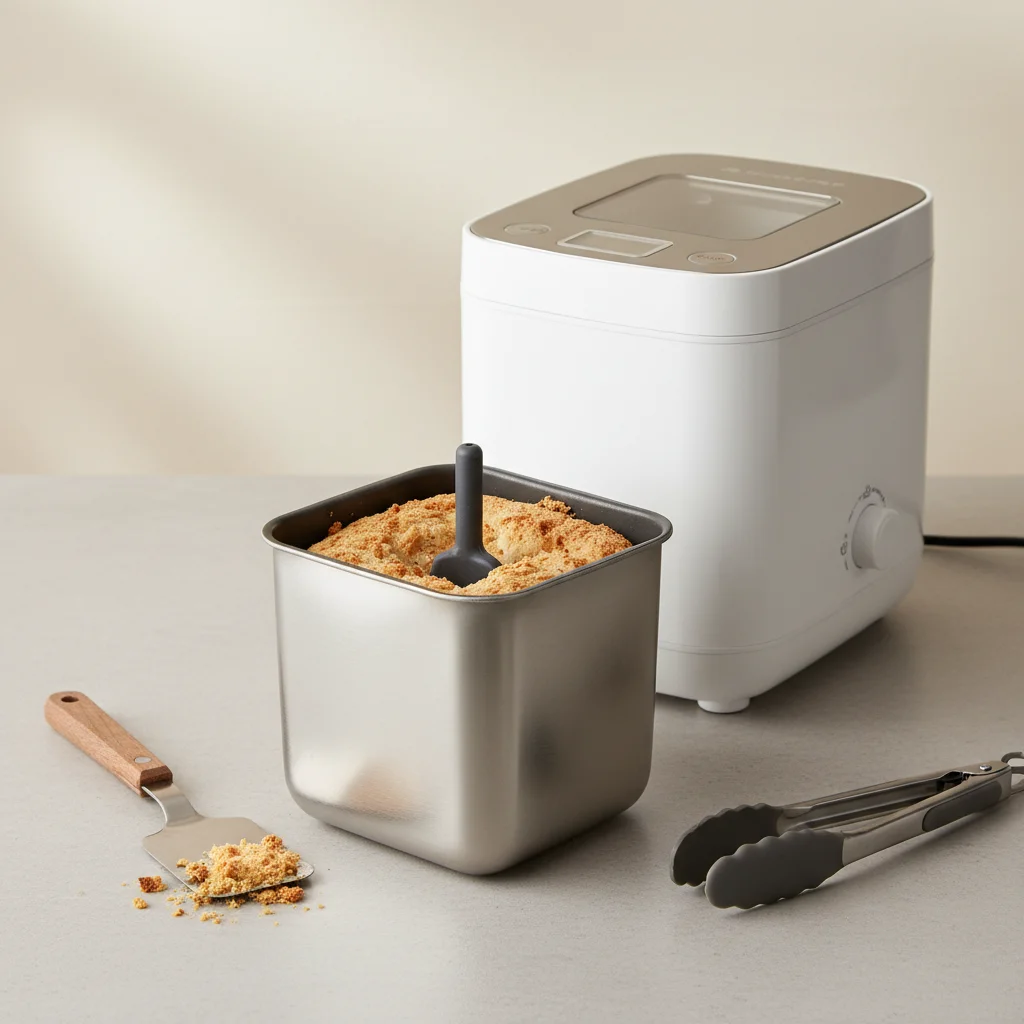
If your bread maker paddle is stuck, don’t panic. The most common culprits are dried dough residue, a misaligned shaft, or a worn-out seal. You can often resolve this issue with one of three simple fixes, preventing damage to your machine and ensuring smooth operation for your next loaf.
Understanding Why Your Paddle Gets Stuck
A bread maker paddle can become stuck for several reasons. Over time, small amounts of dough can dry and harden around the paddle shaft, creating a strong adhesive bond. This is especially true if the paddle isn’t cleaned immediately after use. Another common cause is a slight misalignment of the paddle on its shaft, which can happen during removal or reinsertion. Less frequently, the internal seal around the paddle shaft can wear down, allowing dough to seep into the mechanism and cause sticking.
Quick Fix 1: Soaking and Gentle Wiggling
The simplest solution for a stuck paddle is often a good soak. Fill the bread maker pan with warm, soapy water, ensuring the water level covers the paddle. Let it sit for at least 30 minutes, or even an hour, to soften any dried dough. After soaking, gently wiggle the paddle from side to side. Avoid forceful pulling, as this can damage the shaft or the pan’s non-stick coating. If it still doesn’t budge, try rotating it slightly while wiggling.
Quick Fix 2: Using a Non-Abrasive Tool
|
Our Picks for the Best Bread Maker in 2026
As an Amazon Associate I earn from qualifying purchases.
|
||
| Num | Product | Action |
|---|---|---|
| 1 | Rosewill 25-in-1 Automatic Bread Maker Machine with 3 Loaf Size up to 2 Lb, 700W High Power Dual Heater Bread Maker with BPA-free Nonstick Coating Pan, Max 15 Hours Delay Timer, Low Noise - Gray |

|
| 2 | Elite Gourmet Programmable Bread Maker, 2 lb Loaf, 3 Sizes, 19 Presets incl. Gluten-Free, Dough & Jam, Delay Timer, Black |
|
| 3 | 25-in-1 Bread Maker Machine with Automatic Dual Dispenser, 2LB Stainless Steel Breadmaker with Gluten-Free, Dough, Jam, Yogurt etc Settings, Silver |
|
| 4 | MERIOR 25-IN-1 Bread Maker with Visible Lid | 2lb Automatic Machine, Auto Nut Dispenser, 13-Hour Delay Timer, One-Touch Control & Recipes – Easy Operation, High Success for Homemade Bread |
|
| 5 | Bread Maker, 2.2LB 16-in-1 Bread Machine, Automatic Bread Maker Machine with Nonstick Ceramic Pan & 15H Timer & 1H Keep Warm for Beginner, Breadmaker with Gluten-Free, French, Yogurt, Recipe |
|
| 6 | Cuisinart Bread Maker Machine, Stainless Steel Convection Bread Machine with 16 Menu Options, 3 Loaf Sizes Up to 2 Lb., 3 Crust Colors, Includes Measuring Cup, Spoon & Kneading Hook, CBK-210 |
|
| 7 | Cuisinart Bread Maker Machine, Stainless Steel Automatic Bread Machine with 12 Menu Options, 3 Loaf Sizes up to 2 Lb., 3 Crust Colors, Removable Nonstick Baking Pan & Kneading Paddle, CBK-110NAS |
|
| 8 | Zojirushi BB-PDC20BA Home Bakery Virtuoso Plus Breadmaker, 2 lb. loaf of bread |
|
| 9 | Elite Gourmet Programmable Bread Maker, 2 lb Loaf, 3 Sizes, 19 Presets incl. Gluten-Free, Dough & Jam, Delay Timer, Mint |
|
| 10 | 2LB Bread Maker Machine, OSIPOTO 17 in 1 Automatic Stainless Steel Bread Machine, Non-stick, Beginner-Friendly Controls, 15 Hour Timer, Easy to Clean Low Noise, High Success Rate for Homemade Bread |
|
If soaking alone isn’t enough, you might need a little extra leverage. Carefully use a non-abrasive tool, such as a plastic spatula or a wooden spoon handle, to gently pry around the base of the paddle. Apply even pressure and work your way around the paddle’s circumference. Be extremely cautious not to scratch the non-stick surface of the bread pan. This method is particularly effective for stubborn, dried-on dough that has created a strong seal.
Quick Fix 3: Inspecting the Paddle Shaft and Seal
Once the paddle is removed, take the opportunity to inspect the paddle shaft and the seal within the bread pan. Look for any visible damage, excessive wear, or remaining dough residue. Clean the shaft thoroughly with a small brush or a toothpick to remove any hidden gunk. If the seal appears cracked or severely worn, it might be time to consider a replacement pan or paddle, as a compromised seal will lead to recurring sticking issues.
Preventative Measures for a Smooth Baking Experience
Preventing a stuck paddle is far easier than fixing one. Always remove and clean the paddle immediately after baking, while the pan is still warm. Use a soft sponge and warm, soapy water. Ensure the paddle and shaft are completely dry before reassembling. Regularly check for any dough buildup around the shaft and clean it proactively. Consider applying a thin layer of cooking oil or non-stick spray to the paddle shaft before each use, especially if you frequently bake sticky doughs like whole wheat or rye.
- Always clean the paddle immediately after use.
- Ensure the paddle shaft is completely dry before reinsertion.
- Apply a thin layer of cooking oil to the paddle shaft for sticky doughs.
- Inspect the paddle and pan seal for wear and tear regularly.
- Avoid overfilling the bread pan, which can force dough into the paddle mechanism.
