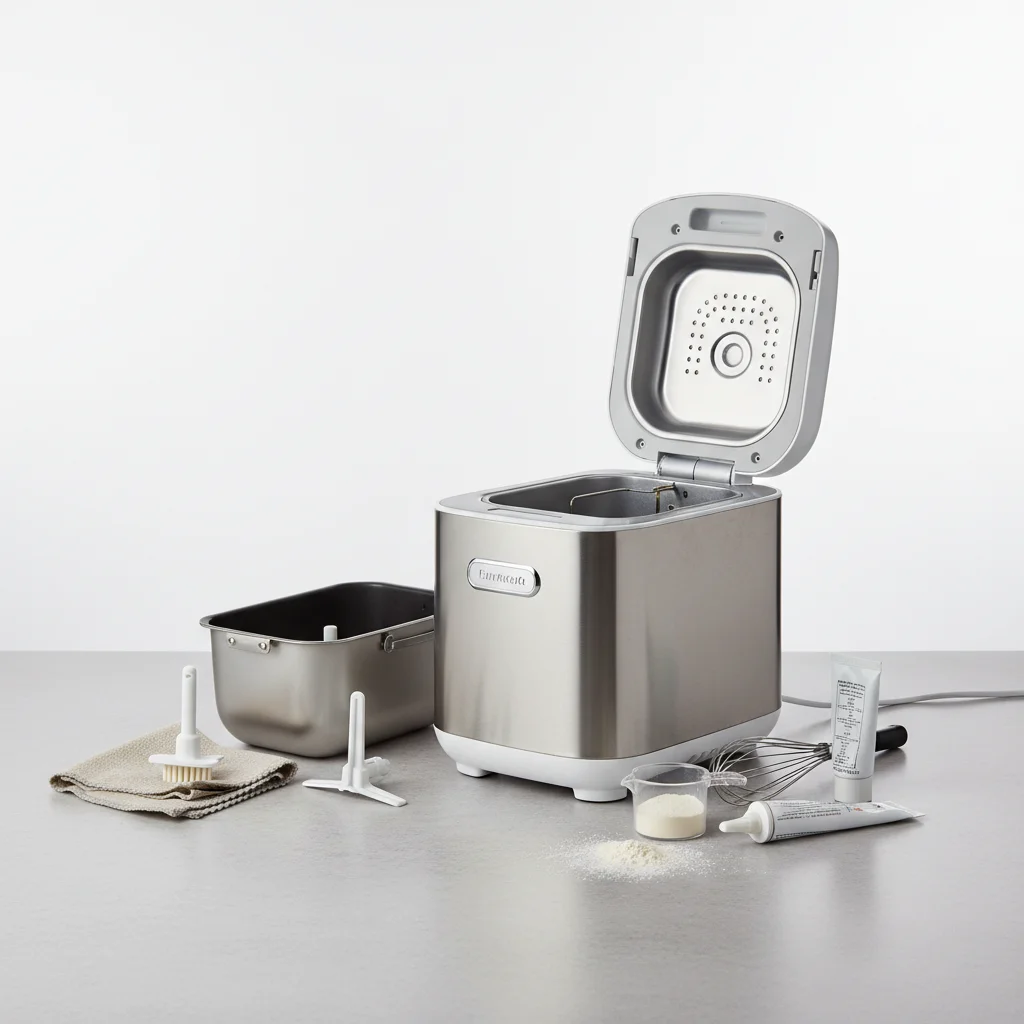
Proper bread maker maintenance is crucial for extending the lifespan of your appliance and ensuring consistent baking results. By following a few simple steps, you can prevent common issues and keep your bread maker running smoothly for years. This guide will detail essential cleaning routines, storage tips, and troubleshooting advice to help you maximize your bread maker’s durability.
Regular Cleaning for Optimal Performance
A clean bread maker is a happy bread maker. After each use, it’s important to clean the bread pan, kneading paddle, and the interior of the machine. The bread pan and paddle should be washed with warm, soapy water and dried thoroughly. Avoid abrasive cleaners or scouring pads, as these can damage the non-stick coating. For the interior, wipe down any crumbs or spills with a damp cloth. Pay special attention to the heating element area, ensuring it’s free from debris.
Periodically, you should also clean the exterior of your bread maker. A soft, damp cloth is usually sufficient. If your machine has a viewing window, use a glass cleaner sparingly to avoid streaks. Regular cleaning not only keeps your appliance looking good but also prevents food buildup that can affect performance and hygiene.
Storage Solutions to Protect Your Investment
When not in use, proper storage can significantly impact your bread maker’s longevity. Store your bread maker in a cool, dry place away from direct sunlight and extreme temperatures. Excessive heat or cold can damage electronic components and plastic parts. If you have a dust cover, use it to protect the machine from dust and grime, which can accumulate in vents and crevices.
Ensure the power cord is neatly wrapped and not kinked or strained. Avoid stacking heavy items on top of your bread maker, as this can cause structural damage. If you’re storing it for an extended period, consider removing the kneading paddle and storing it separately to prevent it from getting stuck or lost.
Troubleshooting Common Wear and Tear
|
Our Picks for the Best Bread Maker in 2026
As an Amazon Associate I earn from qualifying purchases.
|
||
| Num | Product | Action |
|---|---|---|
| 1 | Bread Maker, 2.2LB 16-in-1 Bread Machine, Automatic Bread Maker Machine with Nonstick Ceramic Pan & 15H Timer & 1H Keep Warm for Beginner, Breadmaker with Gluten-Free, French, Yogurt, Recipe |

|
| 2 | Cuisinart Bread Maker Machine, Stainless Steel Automatic Bread Machine with 12 Menu Options, 3 Loaf Sizes up to 2 Lb., 3 Crust Colors, Removable Nonstick Baking Pan & Kneading Paddle, CBK-110NAS |
|
| 3 | Rosewill 25-in-1 Automatic Bread Maker Machine with 3 Loaf Size up to 2 Lb, 700W High Power Dual Heater Bread Maker with BPA-free Nonstick Coating Pan, Max 15 Hours Delay Timer, Low Noise - Gray |
|
| 4 | Elite Gourmet Programmable Bread Maker, 2 lb Loaf, 3 Sizes, 19 Presets incl. Gluten-Free, Dough & Jam, Delay Timer, Mint |
|
| 5 | MERIOR 25-IN-1 Bread Maker with Visible Lid | 2lb Automatic Machine, Auto Nut Dispenser, 13-Hour Delay Timer, One-Touch Control & Recipes – Easy Operation, High Success for Homemade Bread |
|
| 6 | Cuisinart Bread Maker Machine, Stainless Steel Convection Bread Machine with 16 Menu Options, 3 Loaf Sizes Up to 2 Lb., 3 Crust Colors, Includes Measuring Cup, Spoon & Kneading Hook, CBK-210 |
|
| 7 | Elite Gourmet Programmable Bread Maker, 2 lb Loaf, 3 Sizes, 19 Presets incl. Gluten-Free, Dough & Jam, Delay Timer, Black |
|
| 8 | Zojirushi BB-PDC20BA Home Bakery Virtuoso Plus Breadmaker, 2 lb. loaf of bread |
|
| 9 | 25-in-1 Bread Maker Machine with Automatic Dual Dispenser, 2LB Stainless Steel Breadmaker with Gluten-Free, Dough, Jam, Yogurt etc Settings, Silver |
|
| 10 | 2LB Bread Maker Machine, OSIPOTO 17 in 1 Automatic Stainless Steel Bread Machine, Non-stick, Beginner-Friendly Controls, 15 Hour Timer, Easy to Clean Low Noise, High Success Rate for Homemade Bread |
|
Even with the best care, bread makers can experience wear and tear. Common issues include a stiff kneading paddle, a noisy motor, or inconsistent baking. For a stiff paddle, try soaking it in warm water to loosen any baked-on dough before attempting to remove it. A noisy motor might indicate a need for lubrication or a loose component; consult your user manual before attempting any internal repairs.
Inconsistent baking, such as uneven crusts or undercooked centers, can often be traced back to a dirty heating element or a worn-out bread pan. Ensure the heating element is clean and free of obstructions. If your bread pan’s non-stick coating is significantly scratched or peeling, it might be time for a replacement.
Key Maintenance Practices for Longevity
- Clean the bread pan and paddle immediately after each use.
- Wipe down the interior and exterior regularly to prevent buildup.
- Store your bread maker in a cool, dry place, ideally with a dust cover.
- Inspect the power cord for any signs of damage or fraying.
- Address minor issues like a stiff paddle or noisy motor promptly.
When to Consider Professional Service or Replacement
While many maintenance tasks can be handled at home, some issues may require professional attention. If your bread maker is emitting strange smells, producing smoke, or experiencing electrical problems, discontinue use immediately and consult a qualified technician. Attempting to repair complex electrical issues yourself can be dangerous. If your bread maker is old and frequently malfunctioning despite regular maintenance, it might be more cost-effective to invest in a new model rather than pouring money into constant repairs. Consider the age of your appliance and the cost of potential repairs versus the price of a new, more efficient unit.
