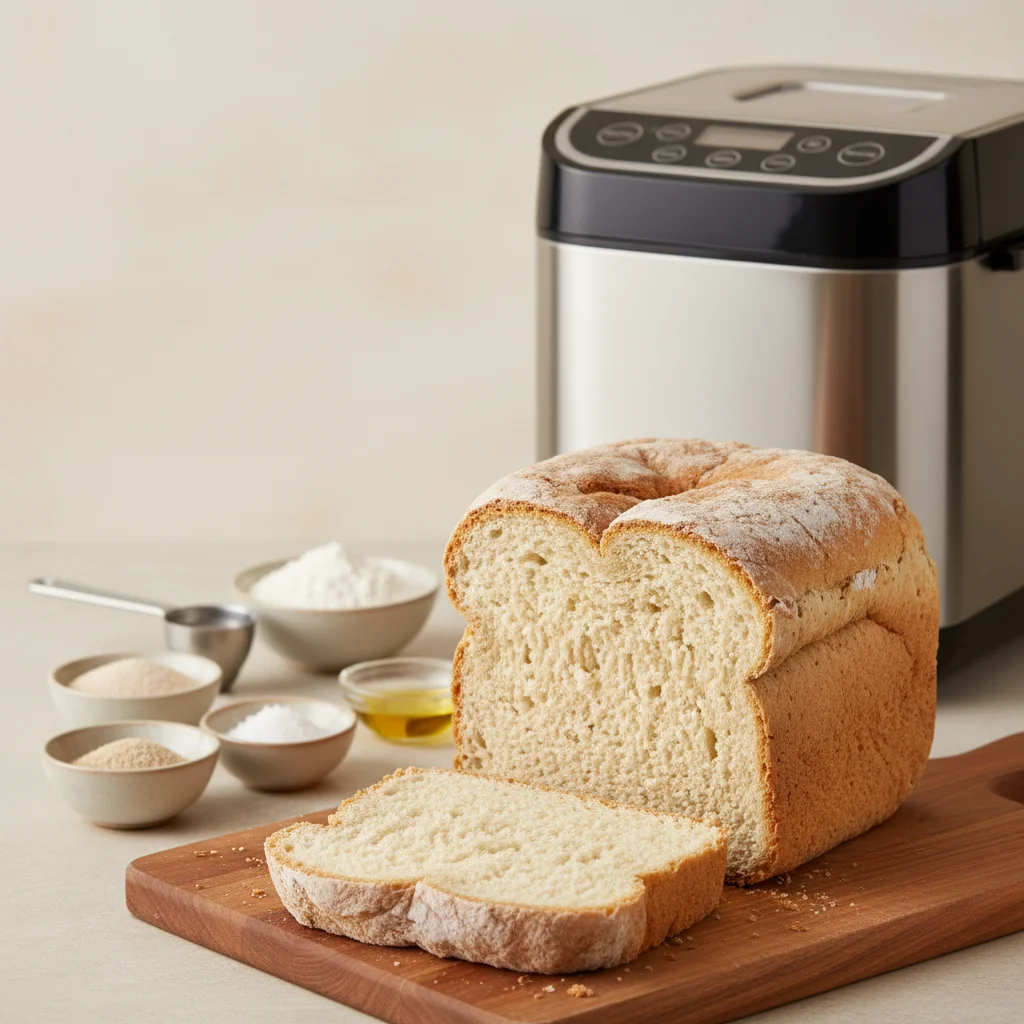
A dense bread maker loaf can be a frustrating outcome after waiting for your fresh bread to bake. The good news is that there are five simple fixes you can implement to achieve a lighter, airier texture in your homemade bread. Often, the issue stems from common mistakes in ingredient measurement, yeast activity, or even the bread maker’s settings.
Understanding Why Your Bread Loaf is Dense
Before diving into solutions, it’s helpful to understand the root causes of a dense loaf. The primary culprits are usually related to the yeast’s ability to produce enough gas to make the dough rise, or the dough’s structure being too weak or too strong. Incorrect flour-to-liquid ratios, expired yeast, or even environmental factors can all play a role in the final texture of your bread.
Fix 1: Check Your Yeast’s Potency and Quantity
Yeast is the living organism responsible for making your bread rise. If your yeast is old or inactive, it won’t produce enough carbon dioxide to create a light, airy crumb. Always check the expiration date on your yeast package. To test its potency, dissolve 1 teaspoon of sugar in 1/2 cup of warm water (105-115°F or 40-46°C), then sprinkle 2 1/4 teaspoons of yeast over it. Let it sit for 5-10 minutes. If it’s foamy and bubbly, your yeast is active. If not, it’s time to buy new yeast. Additionally, ensure you are using the correct amount of yeast specified in your recipe; too little will result in a dense loaf, while too much can cause it to rise too quickly and then collapse.
Fix 2: Accurate Ingredient Measurement is Key
|
Our Picks for the Best Bread Maker in 2026
As an Amazon Associate I earn from qualifying purchases.
|
||
| Num | Product | Action |
|---|---|---|
| 1 | Rosewill 25-in-1 Automatic Bread Maker Machine with 3 Loaf Size up to 2 Lb, 700W High Power Dual Heater Bread Maker with BPA-free Nonstick Coating Pan, Max 15 Hours Delay Timer, Low Noise - Gray |

|
| 2 | Zojirushi BB-PDC20BA Home Bakery Virtuoso Plus Breadmaker, 2 lb. loaf of bread |
|
| 3 | Cuisinart Bread Maker Machine, Stainless Steel Convection Bread Machine with 16 Menu Options, 3 Loaf Sizes Up to 2 Lb., 3 Crust Colors, Includes Measuring Cup, Spoon & Kneading Hook, CBK-210 |
|
| 4 | 2LB Bread Maker Machine, OSIPOTO 17 in 1 Automatic Stainless Steel Bread Machine, Non-stick, Beginner-Friendly Controls, 15 Hour Timer, Easy to Clean Low Noise, High Success Rate for Homemade Bread |
|
| 5 | 25-in-1 Bread Maker Machine with Automatic Dual Dispenser, 2LB Stainless Steel Breadmaker with Gluten-Free, Dough, Jam, Yogurt etc Settings, Silver |
|
| 6 | Elite Gourmet Programmable Bread Maker, 2 lb Loaf, 3 Sizes, 19 Presets incl. Gluten-Free, Dough & Jam, Delay Timer, Black |
|
| 7 | MERIOR 25-IN-1 Bread Maker with Visible Lid | 2lb Automatic Machine, Auto Nut Dispenser, 13-Hour Delay Timer, One-Touch Control & Recipes – Easy Operation, High Success for Homemade Bread |
|
| 8 | Bread Maker, 2.2LB 16-in-1 Bread Machine, Automatic Bread Maker Machine with Nonstick Ceramic Pan & 15H Timer & 1H Keep Warm for Beginner, Breadmaker with Gluten-Free, French, Yogurt, Recipe |
|
| 9 | Cuisinart Bread Maker Machine, Stainless Steel Automatic Bread Machine with 12 Menu Options, 3 Loaf Sizes up to 2 Lb., 3 Crust Colors, Removable Nonstick Baking Pan & Kneading Paddle, CBK-110NAS |
|
| 10 | Elite Gourmet Programmable Bread Maker, 2 lb Loaf, 3 Sizes, 19 Presets incl. Gluten-Free, Dough & Jam, Delay Timer, Mint |
|
Baking is a science, and precise measurements are crucial. Using too much flour or not enough liquid can lead to a dry, dense dough that struggles to rise. Always use proper measuring techniques: level off dry ingredients with a straight edge and measure liquids at eye level. Consider using a kitchen scale for flour, as scooping can pack it down, leading to an excess amount. Even a small deviation can significantly impact the final texture of your bread.
Fix 3: Optimize Water Temperature and Quality
The temperature of the water you use is vital for activating yeast. Water that is too cold won’t activate the yeast, while water that is too hot can kill it. Aim for water between 105-115°F (40-46°C). You can use a kitchen thermometer to ensure accuracy. Furthermore, hard water or water with high chlorine content can sometimes inhibit yeast activity. If you suspect your tap water is an issue, try using filtered or bottled water for your bread making.
Fix 4: Adjust Your Bread Maker’s Cycle Settings
Many bread makers offer various cycles, and selecting the wrong one can contribute to a dense loaf. For instance, a rapid bake cycle might not provide enough time for the dough to properly rise, resulting in a denser texture. Experiment with different settings, such as the
