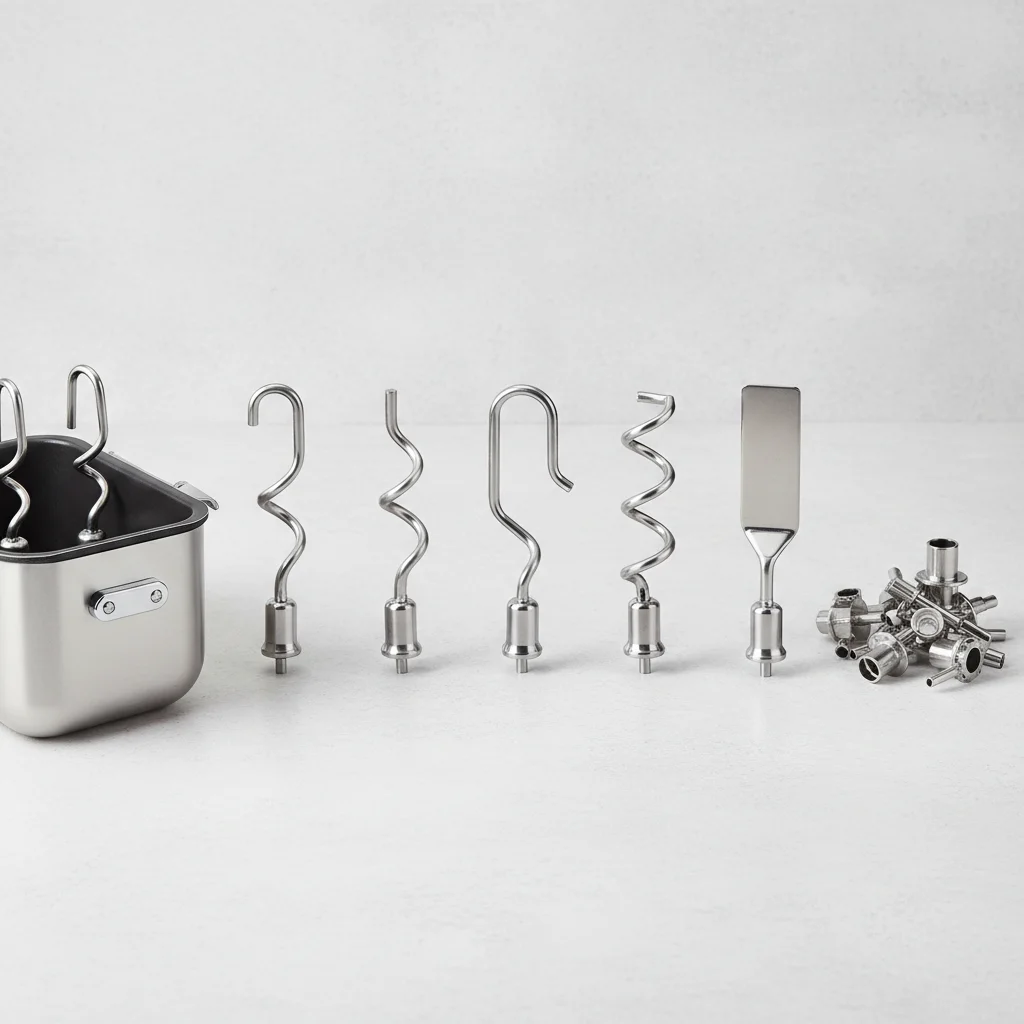
Understanding whether bread maker dough hooks are interchangeable is crucial for maintaining your appliance’s performance. While many hooks appear similar, they are generally not universally interchangeable due to variations in shaft design, attachment mechanisms, and pan dimensions across different bread maker brands and models. Using an incorrect dough hook can lead to improper mixing, damage to the bread pan, or even a broken drive shaft.
Why Dough Hooks Aren’t Universal
Bread maker manufacturers design dough hooks to fit specific models. The key differences lie in the shape and size of the shaft opening, which must perfectly align with the bread maker’s drive shaft. Even a millimeter’s difference can prevent the hook from seating correctly or cause it to wobble during operation. Furthermore, the hook’s height and paddle design are optimized for the specific bread pan’s dimensions, ensuring efficient dough kneading without scraping the sides or bottom.
Another factor is the material and coating. Many bread maker pans and hooks feature non-stick coatings, and using a hook not designed for your pan could scratch or damage this surface, leading to dough sticking and potential health concerns if the coating flakes off. Always consult your bread maker’s manual or the manufacturer’s website for compatible replacement parts.
Identifying the Right Replacement Hook
When your bread maker dough hook needs replacing, the best approach is to identify the exact make and model of your bread maker. This information is usually found on a label on the bottom or back of the appliance. With this detail, you can search for genuine OEM (Original Equipment Manufacturer) replacement parts. These parts are guaranteed to fit and function as intended, preserving your bread maker’s warranty and performance.
If OEM parts are unavailable or too costly, some third-party manufacturers produce compatible hooks. However, exercise caution and read reviews to ensure quality and fit. Look for hooks specifically advertised as compatible with your bread maker’s model number, rather than generic ‘universal’ hooks.
- Check your bread maker’s model number.
- Consult the manufacturer’s official parts list.
- Measure your existing hook’s shaft dimensions.
- Read reviews for third-party compatibility.
- Consider the material and non-stick coating.
Consequences of Using an Incorrect Hook
|
Our Picks for the Best Bread Maker in 2026
As an Amazon Associate I earn from qualifying purchases.
|
||
| Num | Product | Action |
|---|---|---|
| 1 | Elite Gourmet Programmable Bread Maker, 2 lb Loaf, 3 Sizes, 19 Presets incl. Gluten-Free, Dough & Jam, Delay Timer, Black |

|
| 2 | MERIOR 25-IN-1 Bread Maker with Visible Lid | 2lb Automatic Machine, Auto Nut Dispenser, 13-Hour Delay Timer, One-Touch Control & Recipes – Easy Operation, High Success for Homemade Bread |
|
| 3 | 25-in-1 Bread Maker Machine with Automatic Dual Dispenser, 2LB Stainless Steel Breadmaker with Gluten-Free, Dough, Jam, Yogurt etc Settings, Silver |
|
| 4 | Rosewill 25-in-1 Automatic Bread Maker Machine with 3 Loaf Size up to 2 Lb, 700W High Power Dual Heater Bread Maker with BPA-free Nonstick Coating Pan, Max 15 Hours Delay Timer, Low Noise - Gray |
|
| 5 | Cuisinart Bread Maker Machine, Stainless Steel Convection Bread Machine with 16 Menu Options, 3 Loaf Sizes Up to 2 Lb., 3 Crust Colors, Includes Measuring Cup, Spoon & Kneading Hook, CBK-210 |
|
| 6 | Zojirushi BB-PDC20BA Home Bakery Virtuoso Plus Breadmaker, 2 lb. loaf of bread |
|
| 7 | Bread Maker, 2.2LB 16-in-1 Bread Machine, Automatic Bread Maker Machine with Nonstick Ceramic Pan & 15H Timer & 1H Keep Warm for Beginner, Breadmaker with Gluten-Free, French, Yogurt, Recipe |
|
| 8 | Cuisinart Bread Maker Machine, Stainless Steel Automatic Bread Machine with 12 Menu Options, 3 Loaf Sizes up to 2 Lb., 3 Crust Colors, Removable Nonstick Baking Pan & Kneading Paddle, CBK-110NAS |
|
| 9 | Elite Gourmet Programmable Bread Maker, 2 lb Loaf, 3 Sizes, 19 Presets incl. Gluten-Free, Dough & Jam, Delay Timer, Mint |
|
| 10 | 2LB Bread Maker Machine, OSIPOTO 17 in 1 Automatic Stainless Steel Bread Machine, Non-stick, Beginner-Friendly Controls, 15 Hour Timer, Easy to Clean Low Noise, High Success Rate for Homemade Bread |
|
Using a dough hook that isn’t designed for your bread maker can lead to several problems. The most immediate issue is often poor kneading performance. An ill-fitting hook may not properly incorporate ingredients, resulting in dense, unevenly mixed dough. It can also cause the dough to climb the hook excessively, leading to messy baking and potential motor strain.
More severe consequences include damage to the bread maker itself. A hook that doesn’t seat correctly can strip the drive shaft, wear down the pan’s internal mechanism, or even break during operation. This kind of damage can be expensive to repair and may void your appliance’s warranty. Always prioritize using the correct part to ensure the longevity and optimal function of your bread maker.
Tips for Maintaining Your Dough Hook
Proper maintenance can extend the life of your bread maker dough hook. After each use, remove the hook and clean it thoroughly. Many hooks are dishwasher safe, but hand washing with warm, soapy water is often recommended to preserve non-stick coatings. Pay special attention to the area where the hook attaches to the shaft, ensuring no dough residue hardens there, which could impede future attachment.
Regularly inspect your dough hook for signs of wear, such as bent paddles, chipped non-stick coating, or corrosion. If you notice any significant damage, it’s time to replace the hook. Keeping a spare hook on hand can be a good idea, especially if you bake frequently, to avoid interruptions in your baking routine.
When to Replace Your Dough Hook
Knowing when to replace your dough hook is key to consistent baking results. Beyond obvious damage like bending or breakage, look for signs of wear on the non-stick coating. If the coating is flaking or scratched, it can cause dough to stick and may even introduce unwanted particles into your bread. A worn hook might also become less efficient at kneading, leading to less-than-perfect loaves.
If your bread maker starts producing loaves with an unusual texture, and you’ve ruled out other variables like yeast or flour quality, a worn dough hook could be the culprit. A new, properly fitting hook can often restore your bread maker’s kneading efficiency and improve the quality of your homemade bread.
