There are few kitchen sounds more grating than the persistent squeak of a bread maker as it dutifully kneads dough. What starts as a gentle whir can sometimes evolve into an annoying protest, signaling that your beloved appliance needs a little attention. But don’t despair! A noisy bread maker doesn’t necessarily mean the end for your homemade loaf dreams. Often, these irritating sounds can be quickly diagnosed and fixed with a few simple DIY steps, saving you the cost of a repair shop or a new machine. This comprehensive guide will walk you through the common culprits behind a squeaky bread maker and provide clear, actionable solutions, empowering you to restore peace to your kitchen and ensure your bread maker continues to deliver perfect loaves for years to come.
Why Silence Your Squeaky Bread Maker?
Addressing the unwelcome squeak from your bread maker goes beyond just quieting the noise; it’s about preserving the life and efficiency of your appliance. A persistent squeak often indicates friction or wear in critical moving parts, like the paddle shaft, drive belt, or motor bearings. Ignoring these early warning signs can lead to accelerated wear and tear, potentially causing more significant, and costly, damage down the line. By taking proactive steps, you prevent minor issues from escalating into major malfunctions, extending the lifespan of your machine. Moreover, a smooth-running bread maker ensures consistent kneading, which is crucial for achieving the perfect texture and rise in your homemade bread. Ultimately, a quiet machine means a happier baker and delicious, perfectly kneaded bread every time.
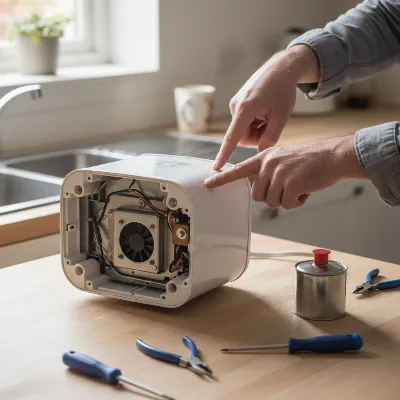 A person troubleshooting a noisy bread maker in a home kitchen setting, showing hands inspecting the machine's base
Understanding the Common Causes of Bread Maker Squeaks
Before diving into repairs, identifying the root cause of the squeak is crucial. Several components within your bread maker can be responsible for the unwanted noise. The most frequent culprit is often the paddle shaft, which can become stiff or dry where it connects to the internal mechanism, especially if dough or flour residue accumulates around its seal. Another common source is the drive belt, a rubber belt that connects the motor to the kneading paddle. Over time, these belts can wear out, stretch, become misaligned, or even crack, leading to a squealing or rubbing sound.
Less common, but still possible, are issues with the motor bearings. These small bearings allow the motor to spin smoothly, and if they dry out or wear down, they can produce a high-pitched squeak. Finally, loose internal components or even the bread pan itself rattling against the housing can sometimes mimic a squeak. Understanding these potential problem areas will help you pinpoint the exact source of the noise, making your troubleshooting process more efficient and effective.
Safety First: Before You Begin Your Repair
Prioritizing safety is paramount when working with any electrical appliance. Before you even think about opening up your bread maker or attempting any repair, always ensure the machine is completely unplugged from the power outlet. This fundamental step prevents any risk of electrical shock or accidental activation while your hands are inside the unit.
Additionally, allow the bread maker to cool down completely if it has been recently used, as internal components can retain heat. Gather all your tools in a well-lit, clean workspace to avoid fumbling and potential accidents. If at any point you feel uncomfortable or uncertain about a step, it’s always best to consult a professional. Your safety and the integrity of your appliance depend on following these precautions diligently.
Essential Tools and a Step-by-Step Troubleshooting Guide
To effectively diagnose and fix a squeaky bread maker, having the right tools on hand will make the process smoother and safer. You won’t need an elaborate workshop, but a few basic items are essential:
- Screwdrivers: Both Phillips head and flathead, in various sizes, to open the casing.
- Lubricant: Food-grade mineral oil or silicone grease is ideal for parts that might come into contact with food (like the paddle shaft). For internal mechanical parts, a general-purpose light machine oil or sewing machine oil can be used. Avoid WD-40 or similar penetrating oils, as they are not designed for long-term lubrication and can attract dust.
- Clean Rags or Paper Towels: For wiping away old grease and cleaning surfaces.
- Gloves (optional): To keep your hands clean.
- Flashlight: To illuminate dark internal areas.
Step-by-Step Troubleshooting:
|
Our Picks for the Best Bread Maker in 2026
As an Amazon Associate I earn from qualifying purchases.
|
||
| Num | Product | Action |
|---|---|---|
| 1 | Elite Gourmet Programmable Bread Maker, 2 lb Loaf, 3 Sizes, 19 Presets incl. Gluten-Free, Dough & Jam, Delay Timer, Mint |

|
| 2 | MERIOR 25-IN-1 Bread Maker with Visible Lid | 2lb Automatic Machine, Auto Nut Dispenser, 13-Hour Delay Timer, One-Touch Control & Recipes – Easy Operation, High Success for Homemade Bread |
|
| 3 | 2LB Bread Maker Machine, OSIPOTO 17 in 1 Automatic Stainless Steel Bread Machine, Non-stick, Beginner-Friendly Controls, 15 Hour Timer, Easy to Clean Low Noise, High Success Rate for Homemade Bread |
|
| 4 | 25-in-1 Bread Maker Machine with Automatic Dual Dispenser, 2LB Stainless Steel Breadmaker with Gluten-Free, Dough, Jam, Yogurt etc Settings, Silver |
|
| 5 | Rosewill 25-in-1 Automatic Bread Maker Machine with 3 Loaf Size up to 2 Lb, 700W High Power Dual Heater Bread Maker with BPA-free Nonstick Coating Pan, Max 15 Hours Delay Timer, Low Noise - Gray |
|
| 6 | Bread Maker, 2.2LB 16-in-1 Bread Machine, Automatic Bread Maker Machine with Nonstick Ceramic Pan & 15H Timer & 1H Keep Warm for Beginner, Breadmaker with Gluten-Free, French, Yogurt, Recipe |
|
| 7 | Elite Gourmet Programmable Bread Maker, 2 lb Loaf, 3 Sizes, 19 Presets incl. Gluten-Free, Dough & Jam, Delay Timer, Black |
|
| 8 | Cuisinart Bread Maker Machine, Stainless Steel Convection Bread Machine with 16 Menu Options, 3 Loaf Sizes Up to 2 Lb., 3 Crust Colors, Includes Measuring Cup, Spoon & Kneading Hook, CBK-210 |
|
| 9 | Zojirushi BB-PDC20BA Home Bakery Virtuoso Plus Breadmaker, 2 lb. loaf of bread |
|
| 10 | Cuisinart Bread Maker Machine, Stainless Steel Automatic Bread Machine with 12 Menu Options, 3 Loaf Sizes up to 2 Lb., 3 Crust Colors, Removable Nonstick Baking Pan & Kneading Paddle, CBK-110NAS |
|
- Listen Carefully: Plug in your bread maker (briefly!) and initiate a kneading cycle without ingredients. Try to pinpoint exactly where the squeak is coming from. Is it near the kneading paddle, from the base, or deeper inside?
- Inspect the Kneading Paddle and Shaft: Unplug the machine. Remove the bread pan. Try to spin the kneading paddle by hand. Does it move freely, or does it feel stiff or resistant? Check for any visible residue around the shaft where it enters the pan.
- Check the Bread Pan: Ensure the bread pan sits securely in its housing. Sometimes a loose pan can cause a rattling sound that might be mistaken for a squeak.
- Open the Casing: Turn the bread maker upside down. Locate and remove the screws holding the bottom panel in place. Carefully lift off the panel to expose the internal components like the motor, drive belt, and paddle shaft mechanism.
- Examine the Drive Belt: Once the bottom is open, visually inspect the drive belt. Look for cracks, fraying, or any signs of excessive wear. Check if it’s sitting correctly on its pulleys. A loose or worn belt can slip and squeal.
- Locate Bearing Points: Identify the points where the paddle shaft rotates and where the motor shaft rotates. These are prime locations for friction and squeaks.
Detailed DIY Fixes for Your Noisy Machine
Once you’ve identified the likely source of the squeak, it’s time to apply the appropriate fix. Remember to always keep your bread maker unplugged during these procedures.
Fixing a Squeaky Paddle Shaft:
This is one of the most common issues. The shaft where the kneading paddle attaches can become stiff due to dried dough, flour, or old lubricant.
- Clean the Shaft: Remove the bread pan. Use a small brush or a cotton swab to meticulously clean around the base of the kneading paddle and where the shaft enters the pan. Remove any sticky residue.
- Lubricate the Shaft: From the inside of the bread pan, apply a few drops of food-grade mineral oil or a small amount of food-grade silicone grease around the paddle shaft. Work the paddle back and forth or spin it to help the lubricant penetrate.
- Lubricate from Below (if accessible): With the bottom panel removed, locate where the paddle shaft exits the gearbox mechanism. Apply a few drops of lubricant (food-grade if there’s any chance of migration, otherwise light machine oil) to the bearings or bushings at this point. Spin the shaft by hand to distribute the oil.
Addressing a Worn or Loose Drive Belt:
A squealing belt often indicates wear or improper tension.
- Inspect the Belt: With the bottom cover off, carefully examine the drive belt. If it looks cracked, frayed, or excessively stretched, it likely needs replacement.
- Tighten Loose Pulleys: Sometimes, the pulleys that the belt runs on can become loose. Gently try to wiggle them; if they move, ensure their mounting screws are tightened.
- Consider Replacement: If the belt is clearly worn, finding a replacement might be necessary. You’ll need to note the make and model of your bread maker, and sometimes the part number printed on the belt itself. Replacement is usually straightforward: carefully pry off the old belt (it might be tight), then stretch and guide the new belt onto the pulleys.
“Many bread maker squeaks are simply a cry for lubrication, particularly around the paddle shaft. A small amount of food-grade oil can often bring a noisy machine back to silent operation.” – Dr. Elena Petrova, Appliance Repair Specialist
Silencing a Squeaky Motor:
This is less common and often more challenging for DIYers.
- Locate Motor Bearings: The motor is typically at the back or side of the internal compartment. It usually has small shafts extending from both ends. The bearings are where these shafts exit the motor housing.
- Apply Lubricant (Carefully): Using a fine-tipped applicator or a toothpick, apply a tiny drop of light machine oil to the motor bearings if they are accessible and free from electrical components. Be extremely sparing; too much oil can attract dust.
- Test: Reassemble the bread maker and test it. If the motor continues to squeak after lubrication, or if you can’t access the bearings safely, it might be time to consider professional help or a new motor.
Advanced Inspection and Lubrication Techniques
For more stubborn squeaks, or if the initial fixes don’t fully resolve the issue, a more thorough inspection might be necessary. This involves carefully examining all rotational points and ensuring proper component alignment.
- Check for Misalignment: With the bottom cover off, observe the drive belt and pulleys as you manually turn the kneading shaft (or briefly run the motor). Does the belt track straight, or does it seem to wobble or rub against the pulley edges? Misalignment can cause friction and squeaking. Adjusting motor mounts or pulley positions might be required, but this can be complex and may be best left to a professional.
- Isolate the Sound with a Stethoscope: For a more precise diagnosis, an automotive stethoscope (or even a long screwdriver pressed to your ear) can help you pinpoint the exact source of the squeak within the internal mechanics while the machine is briefly running. Touch the tip to different components – the motor, various parts of the gearbox, and the paddle shaft assembly – to identify the loudest point.
- Re-lubricate Critical Contact Points: Beyond the main paddle shaft and motor bearings, look for any other moving parts that might be rubbing. Sometimes, small metal-on-metal contact points or pivot points within the gearbox can dry out. Apply a very small amount of suitable lubricant to these areas. Always use a clean rag to wipe away any excess.
- Examine the Gearbox: Some bread makers use a small gearbox that connects the motor to the paddle shaft. While generally sealed, if you suspect a noise from this area, it may indicate worn gears or insufficient internal lubrication. Opening a gearbox is usually beyond typical DIY repair and often requires specialized knowledge.
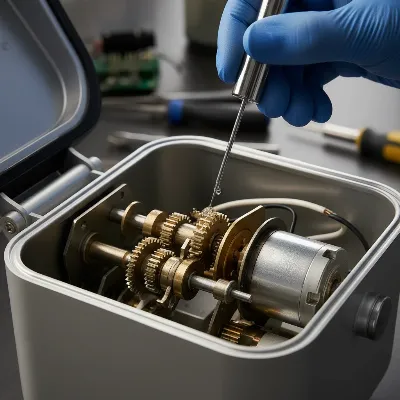 A detailed shot of internal bread maker gears being lubricated with a specialized applicator
Preventative Maintenance for a Quiet Future
Preventing squeaks is far easier than fixing them. Regular maintenance can significantly extend the life of your bread maker and keep it running quietly.
- Clean Regularly: After each use, thoroughly clean the bread pan, especially around the kneading paddle and shaft. Dried dough or flour can become abrasive and cause friction over time.
- Avoid Overloading: Stick to the manufacturer’s recommended ingredient quantities. Overloading the bread maker can strain the motor and drive belt, leading to premature wear and noise.
- Gentle Handling: Be mindful when inserting and removing the bread pan. Forceful handling can misalign components or damage seals.
- Periodic Lubrication: Even if your bread maker isn’t squeaking, a light application of food-grade mineral oil to the paddle shaft every few months (depending on usage) can prevent it from drying out. You can also perform a quick visual inspection of the drive belt for any signs of wear.
- Store Properly: When not in use, store your bread maker in a clean, dry place to prevent dust and debris from entering the internal mechanisms.
When to Seek Professional Help or Consider Replacement
While many bread maker squeaks can be resolved with DIY fixes, there are instances when professional intervention or even replacing the appliance becomes the more practical solution.
- Persistent Squeaks: If you’ve tried all the common DIY fixes and the squeak persists or returns quickly, the issue might be more complex, such as deeply worn motor bearings or a damaged gearbox that requires specialized tools or parts.
- Unidentifiable Source: If you cannot pinpoint the source of the squeak even after thorough inspection, it’s difficult to apply an effective fix. A professional technician has the experience and diagnostic equipment to identify elusive problems.
- Cost vs. New Appliance: For older bread makers, the cost of professional repair for significant issues (like motor or gearbox replacement) might approach or even exceed the price of a new, entry-level bread maker. In such cases, investing in a new appliance with a fresh warranty might be a more economical choice.
- Safety Concerns: If you notice burning smells, excessive heat, sparks, or if the machine functions erratically in addition to squeaking, discontinue use immediately. These symptoms often indicate serious electrical or mechanical failures that pose a safety risk and should only be addressed by a qualified professional or by replacing the unit.
Conclusion
A squeaky bread maker doesn’t have to be a source of frustration or an immediate trip to the appliance store. With a little patience, a few basic tools, and the step-by-step guidance provided, you can often diagnose and fix the issue right in your own kitchen. From lubricating a dry paddle shaft to inspecting the drive belt, most common squeaks are a cry for simple maintenance. By understanding the internal workings of your machine and applying regular preventative care, you can ensure your bread maker continues to produce delicious, homemade loaves quietly and efficiently for many years to come. Don’t let a little noise stand between you and the joy of fresh bread – embrace the DIY spirit and bring silence back to your baking!
What simple maintenance steps have you found most effective in keeping your bread maker running smoothly?
Frequently Asked Questions
Why does my bread maker make a loud grinding or squealing noise?
A loud grinding or squealing noise from your bread maker often points to a worn or misaligned drive belt, or dry motor bearings. Inspect the drive belt for cracks or fraying, and consider lubricating the paddle shaft and any accessible motor bearings with appropriate oil to reduce friction and restore quiet operation.
Can I use any oil to lubricate my bread maker?
No, it’s crucial to use the correct type of lubricant. For components that might come into contact with food, such as the kneading paddle shaft, only use food-grade mineral oil or food-grade silicone grease. For internal mechanical parts like drive shafts or non-food-contact bearings, a light machine oil or sewing machine oil is suitable. Avoid WD-40 or heavy greases.
How often should I lubricate my bread maker?
The frequency of lubrication depends on your bread maker’s usage. For average use (a few times a week), applying a few drops of food-grade mineral oil to the paddle shaft every 3-6 months is generally sufficient as a preventative measure. If you notice stiffness or early signs of a squeak, lubricate immediately.
Is it normal for a new bread maker to squeak?
While not common, a brand new bread maker might occasionally produce a faint squeak as its components settle. However, if the squeak is loud, persistent, or worsens, it could indicate a manufacturing defect or insufficient initial lubrication. Contact the manufacturer’s support for advice or warranty service.
What if lubricating doesn’t fix the squeak in my bread maker?
If lubrication doesn’t resolve the squeak, the problem might be a worn drive belt, a faulty motor, or issues within the gearbox. You’ll need to open the bread maker’s casing to inspect the drive belt for damage or looseness. If these parts appear fine, or if you’re uncomfortable with further disassembly, it may be time to consult a professional appliance repair technician or consider a replacement machine.
